- powerflush
- central heating
- heating costs
Powerflush Cost Guide 2026: UK Prices and What Affects Cost
Central heating powerflush costs in 2026, with prices by radiator count, what is included, red flags and when the quote is worth paying.
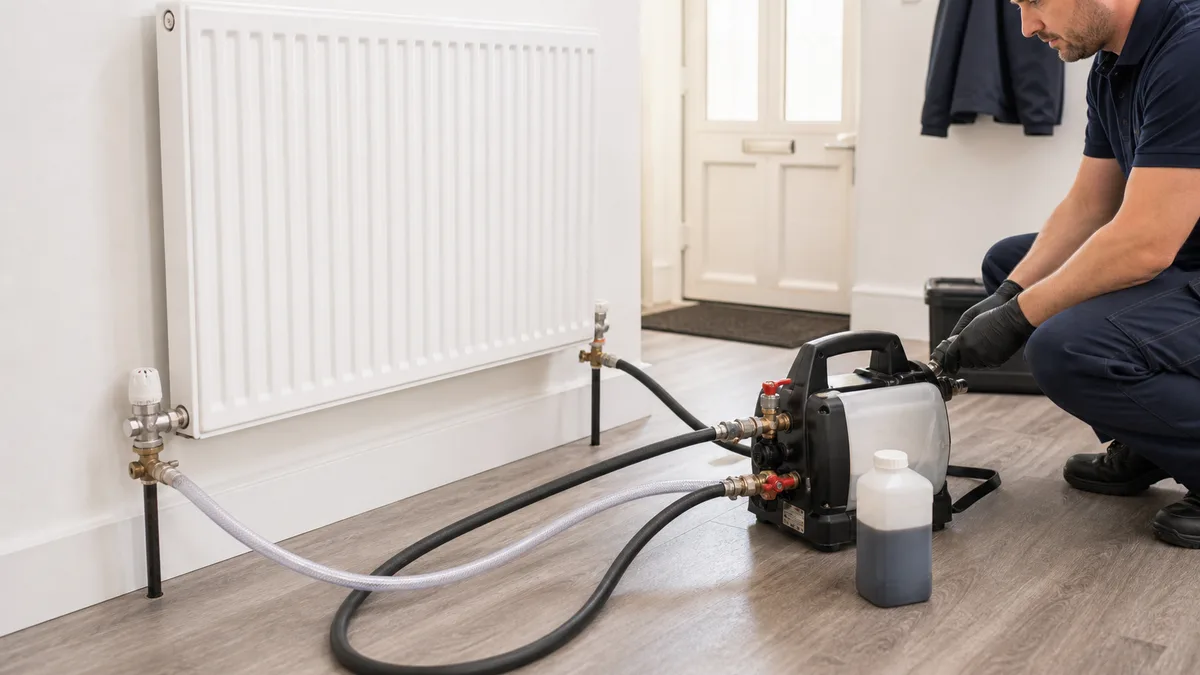
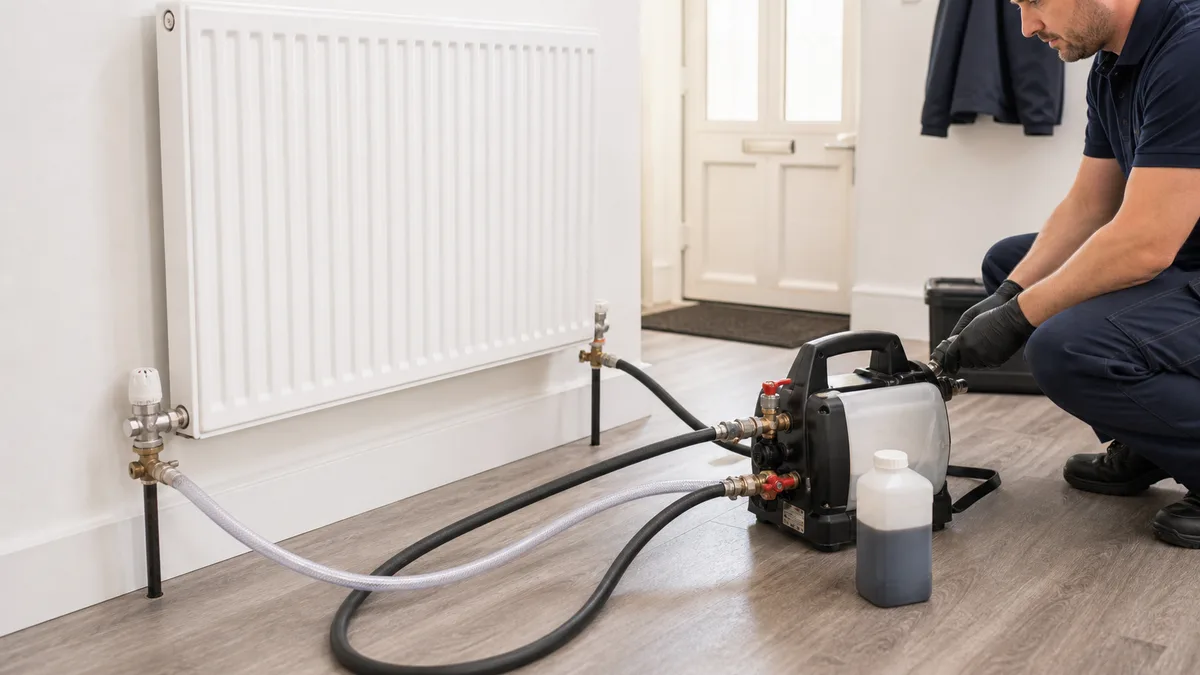
A central heating powerflush typically costs between £300 and £650 for most UK homes in 2026. The final price depends mainly on radiator count, access, system age, sludge level and whether the engineer is adding a magnetic filter.
This guide explains what a proper quote should include, when a low price is a warning sign, and when a powerflush is genuinely worth paying for. For the service itself, see our central heating powerflush page.
Typical powerflush prices in 2026
| Property / system size | Radiators | Typical price range |
|---|---|---|
| 1-2 bed flat | 4-6 | £300-£380 |
| 2-3 bed terrace or semi | 7-10 | £380-£480 |
| 3-4 bed semi | 10-13 | £450-£550 |
| 4-5 bed detached | 14+ | £520-£650+ |
| Commercial or multi-zone system | Per circuit | £500-£1,500+ |
These ranges are for a full professional powerflush using a dedicated machine, cleanser, flushing, inhibitor dosing and post-flush checks. VAT should be confirmed before booking.
A magnetic filter installation is usually quoted separately at £100-£200 supply and fit. It is often worth adding if the system does not already have one, because the filter captures future magnetite before it reaches the boiler.
What’s included in the price
A proper quote should cover more than “put chemical in and drain it out”. Expect:
- System assessment before work starts
- Radiator temperature checks and sludge symptom checks
- Machine connection at a suitable point in the heating circuit
- Cleaning chemical circulated through the system
- Individual radiator or circuit flushing
- MagnaCleanse, magnetic filter or equivalent sludge capture during flushing
- Fresh refill and corrosion inhibitor dosing
- Pressure check, bleed check and heat distribution check
- Written notes on any weak radiator, valve, pump or boiler issue found
Ask the engineer to confirm whether inhibitor, VAT and any report are included. A cheap headline price can become expensive if the essentials are added afterwards.
What affects the price
Number of radiators: The biggest cost driver. Each radiator takes time to isolate, flush, check and bring back into circulation.
System condition: A heavily sludged system takes longer. If circulation is poor or some radiators are completely blocked, the engineer may need more chemical time, extra flushing cycles or individual radiator removal.
System type and age: Older gravity-fed systems, cast iron radiators and microbore pipework are more complex than a modern sealed system with standard panel radiators.
Boiler type: Combi boilers and system boilers have different connection points. Some boilers require the engineer to work around pumps, diverter valves and manufacturer warranty requirements.
Location: London and the south east often run 15-25% higher than the national average because labour, parking, access and older housing stock add time. In hard-water areas, limescale can add more flushing time than a soft-water region with similar radiator count.
Whether a magnetic filter is already fitted: If a filter has been maintained, the sludge load is usually lower and the job may sit nearer the lower end of the range.
Red flags when comparing quotes
Be cautious if:
- The quote is hourly with no cap
- The engineer will not inspect the system before confirming scope
- Inhibitor is not included or not mentioned
- There is no plan for magnetic sludge capture
- The job is described as a full powerflush but only uses the boiler’s own pump
- There is no warning that weak, corroded radiators may leak once sludge is removed
- The price is much lower than competitors but excludes chemicals, VAT or reporting
The main distinction is between a full powerflush and a basic chemical flush. A chemical flush can be suitable for mild contamination, but visible black water, cold radiator bottoms and boiler kettling usually need a proper machine flush. Our powerflush service page explains the difference in more detail.
How long the job takes
A professional powerflush using Kamco, MagnaCleanse or similar equipment typically takes:
- Small property, 6-8 radiators: 4-6 hours
- Medium property, 10-12 radiators: 6-8 hours
- Large property, 14+ radiators: 8-10+ hours
Severe sludge, blocked microbore, poor access or a weak radiator can extend the visit. A standard 3-bedroom home usually takes most of a working day.
What you should receive at the end
- A written report confirming work done
- The make and batch number of chemicals used
- The quantity of inhibitor dosed
- Any observations about system condition, such as a noisy pump or radiator likely to need replacement
- Advice on future maintenance frequency
Some engineers also provide before/after water samples or thermal readings. The visual difference between grey-black waste water and clear refill water is useful evidence of what was removed.
Is a powerflush worth it?
A powerflush is most likely to be worth it when there are clear symptoms:
- Radiators cold at the bottom
- Black water when bleeding radiators
- Slow system warm-up
- Boiler kettling or banging
- Repeated pump or heat-exchanger faults
- New boiler being fitted and the manufacturer requires the system to be cleaned
Potential savings come from:
- Lower gas consumption because heat transfer improves
- Reduced wear on the pump and heat exchanger
- Avoiding boiler heat exchanger replacement
- Extended system life
If your main problem is one radiator cold at the top, start with bleeding rather than booking a full flush. If the radiator is cold at the bottom, use our radiator diagnosis guide to confirm whether sludge is likely.
When a powerflush is not appropriate
- Pipework so old or corroded that the pressure and flow of flushing could dislodge deposits protecting weak joints (your engineer will assess this)
- Very small or recently installed systems with no history of problems (inhibitor top-up is usually sufficient)
- Systems with active leaks that need repair first
- Cases where one isolated radiator valve fault is the real issue
For light maintenance or radiator removal, a full powerflush may be unnecessary. Our guide to draining and flushing a central heating system explains what is realistic as DIY and where professional equipment becomes necessary.