- CCTV survey
- Victorian drainage
- drainage
- property maintenance
UK Property Drainage History: How Your Drain Era Affects Risk
Pre-1910, 1910–1960, 1960s–80s, post-1980 — each era of UK housing has distinct drainage characteristics and failure modes. Here's what to expect based on when your property was built.
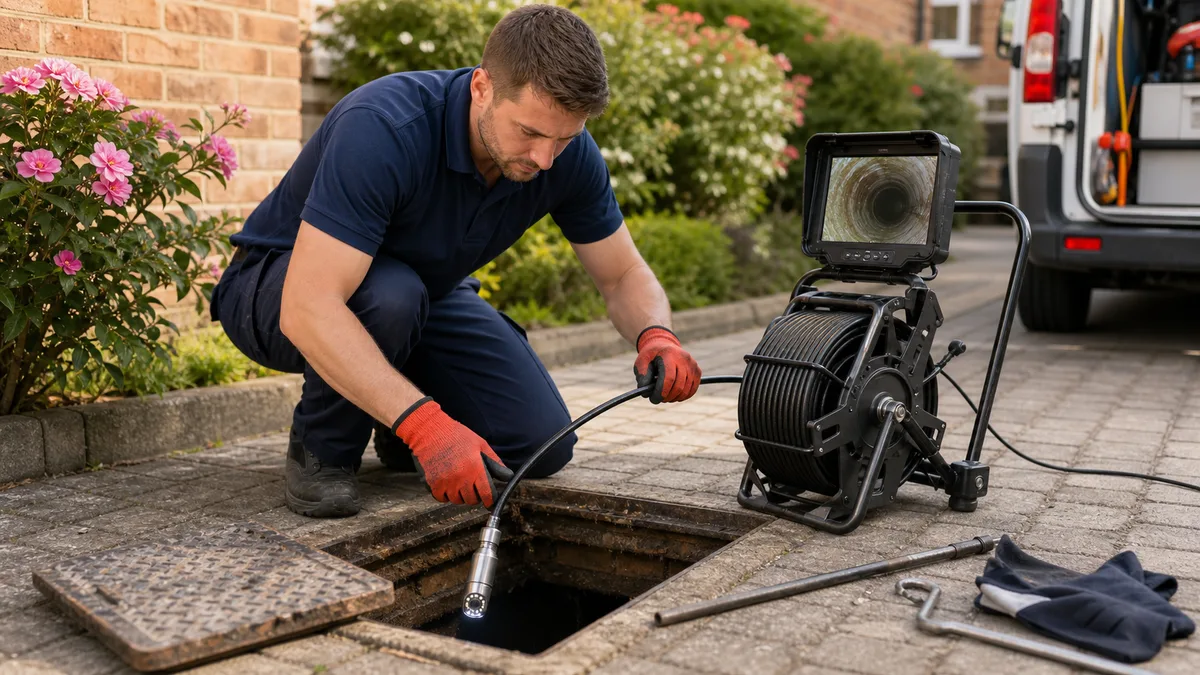
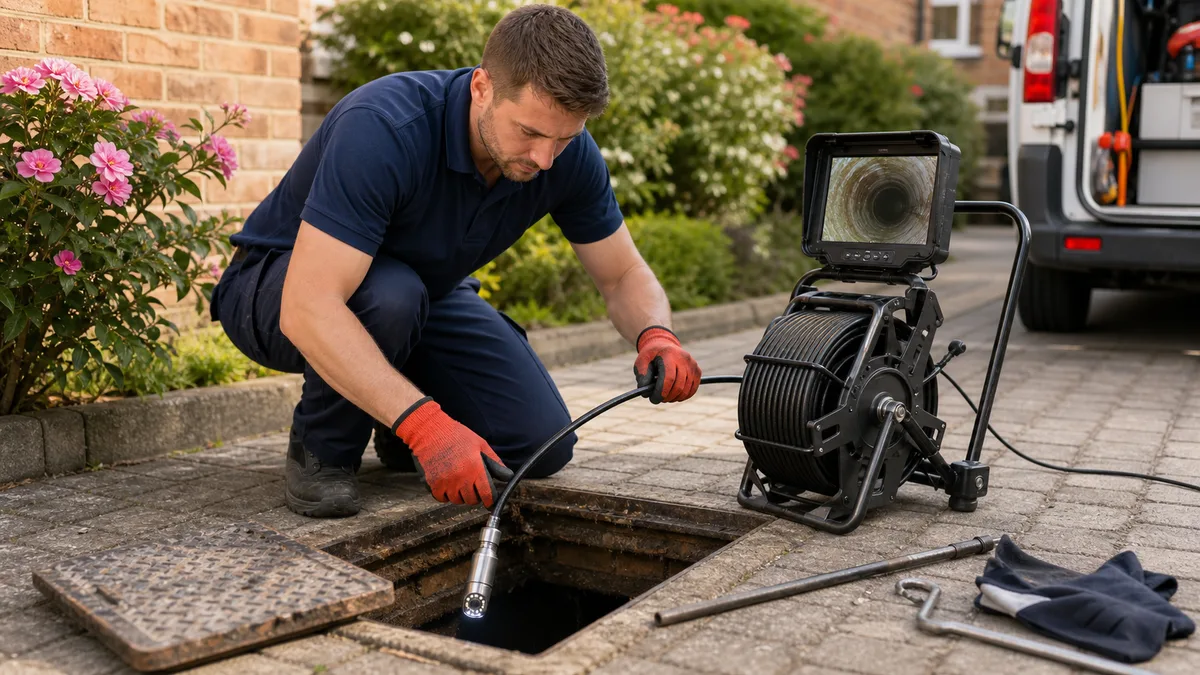
The year a UK property was built is one of the most useful indicators of its drainage characteristics. Each construction era brought different pipe materials, jointing methods, and drainage standards — each with distinctive failure modes as they age. If you know when your property was built, you know what to watch for.
Pre-1910: Victorian and Edwardian
Drainage materials: However, vitrified clay pipe, cement-and-hemp or socket-and-spigot joints, brick inspection chambers.
What holds up: Additionally, the clay pipe body itself. Vitrified clay is chemically inert and mechanically robust. Well-laid Victorian clay pipes in stable ground can function for 150+ years.
What fails: Specifically, - Cement joints crack and open under seasonal ground movement, particularly on shrinkable clay soils
- Root ingress through open joints — the number one problem in properties of this era with any tree coverage
- Brick inspection chambers deteriorate (mortar joints fail, benching deteriorates)
- Lead supply pipes (if not replaced) — health risk
Practical implication: For example, cCTV survey recommended before purchase. Annual jetting if any trees within 15m of drain runs. Pre-purchase CCTV essential.
Combined drainage: As a result, most Victorian properties have combined foul and surface water drainage — both go to the same pipe and sewer. This is legal for existing connections but means high storm flow in the drain system.
1910–1945: Edwardian and inter-war
Drainage materials: Meanwhile, predominantly clay pipe. Some early use of concrete pipes for public sewers. Lead supply pipes continue.
Characteristics: Furthermore, largely as Victorian, but with more standardisation as local building bylaws became more consistent. Slightly better inspection chamber construction in many areas.
Specific watch point: In particular, properties in this era often have rear additions and extensions added later with different drainage connections. The junction between original and extension drainage is often a fault point.
1945–1960: Post-war reconstruction
Drainage materials: Consequently, the post-war housing boom used clay pipe for underground drainage but also introduced pitch fibre pipe — a war-era innovation — for the first time at residential scale. Some areas also used concrete pipes for underground drains.
Critical issue: Pitch fibre. Similarly, properties built in this period may have pitch fibre underground drains. Pitch fibre has a finite lifespan (typically 50–80 years) and deforms (ovulates, collapses) as it ages. Properties from 1945–1965 are in the middle of their pitch fibre failure window.
Practical implication: Moreover, if your property dates from this period and you haven’t had a CCTV survey, prioritise this. Pitch fibre deterioration is invisible above ground but can be at a critical stage.
Supply pipe: Lead or copper, depending on availability and area. Lead pipes were still standard until the 1970s.
1960–1980: Post-war suburban expansion
Drainage materials: However, a transitional period. Clay pipe continued to be used but plastic pipes (PVC) began to appear, particularly for above-ground waste. Pitch fibre continued for underground drains.
Specific issues: Additionally, - Mixed material drainage systems (clay drain, plastic waste connection) with transition joints that can fail
- Some use of cast iron for soil stacks (which rusts) transitioning to plastic
- Pitch fibre underground drain sections alongside clay
Supply pipe: Specifically, gradually transitioning from lead to copper through this period. Properties from the 1970s may have either.
What’s largely avoided: For example, most properties from this era have separate foul and surface water drainage, as this became standard practice in Building Regulations. (But not always — check, particularly in older urban areas.)
1980–2000: Thatcher-era and 90s builds
Drainage materials: As a result, uPVC for above-ground waste and increasing use of UPVC for underground drainage. Some clay pipe underground drainage continues.
Characteristics: Meanwhile, more standardised than earlier eras, with greater Building Regulations consistency. Drainage generally in better condition than Victorian-era properties.
Common issues: Furthermore, - Ground movement in shrinkable clay soils (extensive expansion in the 1980s put new housing on marginal land) causing displaced UPVC joints
- Tree planting in new developments reaching an age where roots are beginning to affect drainage (30–40 year-old trees now in root-invasive zone)
- Some use of non-standard fittings in 1980s speculative housing
Supply pipe: In particular, almost exclusively copper by this period. Lead pipes from this era are extremely rare.
Post-2000: Modern builds
Drainage materials: UPVC for all drainage (above and below ground). MDPE (polyethylene) blue pipe for cold water supply.
Characteristics: Consequently, - Push-fit flexible joints throughout — least susceptible to ground movement
- Separate foul and surface water drainage required
- SUDS requirements for surface water (particularly post-2015)
- Building Regulations inspection and sign-off standard
Issues to watch: Similarly, - Construction debris in newly-installed drains (common in the first 2–3 years — new builds should be surveyed in the defects period)
- SUDS features bedding in — soakaways and drainage fields may underperform initially
- Adoption of shared drainage infrastructure may lag occupation by years
Practical implication: Generally lower maintenance requirement than older properties, but the construction debris issue and SUDS adoption make a post-completion CCTV survey worthwhile.
Using this guide
Moreover, combine the era information with your specific property characteristics:
| Era + Tree coverage | Risk level | Recommended action |
|---|---|---|
| Pre-1910, trees nearby | High | Annual jetting + CCTV every 3 years |
| 1945-1965, any type | High (pitch fibre risk) | CCTV survey urgently |
| 1980s, trees now mature | Medium | CCTV every 5 years |
| Post-2000, no trees | Low | Standard annual maintenance |