- restaurant drains
- commercial drainage
- drain maintenance contract
- grease trap
7 Signs Your Restaurant Drain Needs a Maintenance Contract
Restaurant drains fail faster than domestic ones. These 7 signs tell you when ad-hoc callouts are costing more than a proper maintenance contract would.
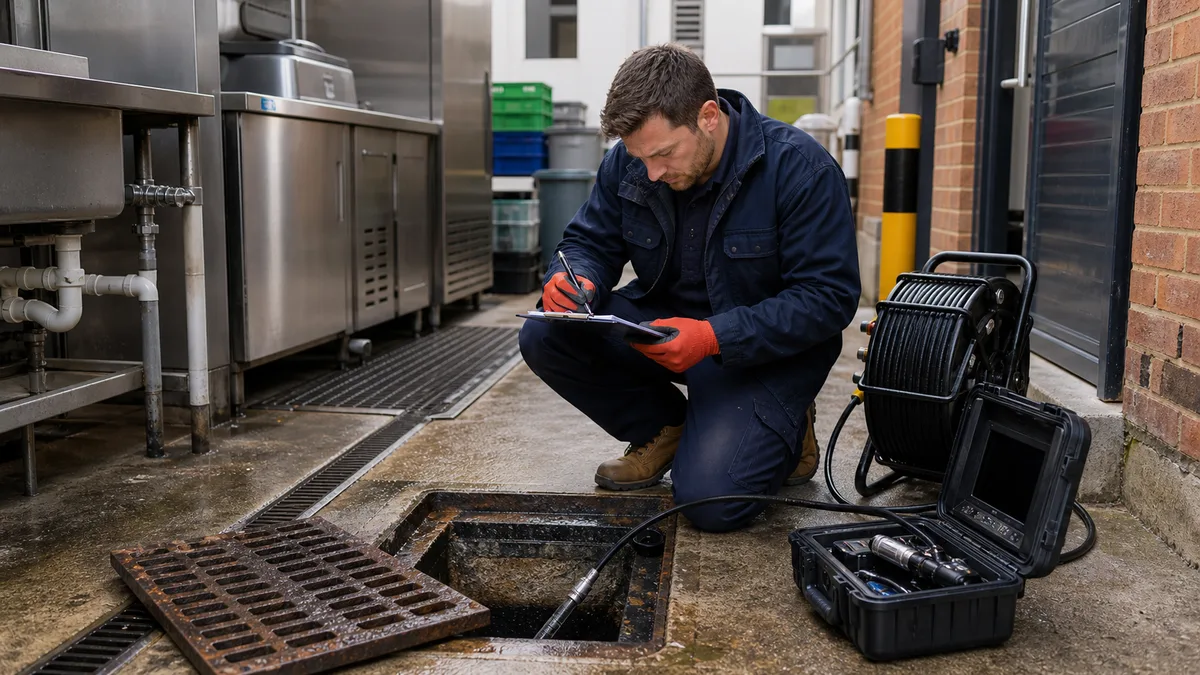
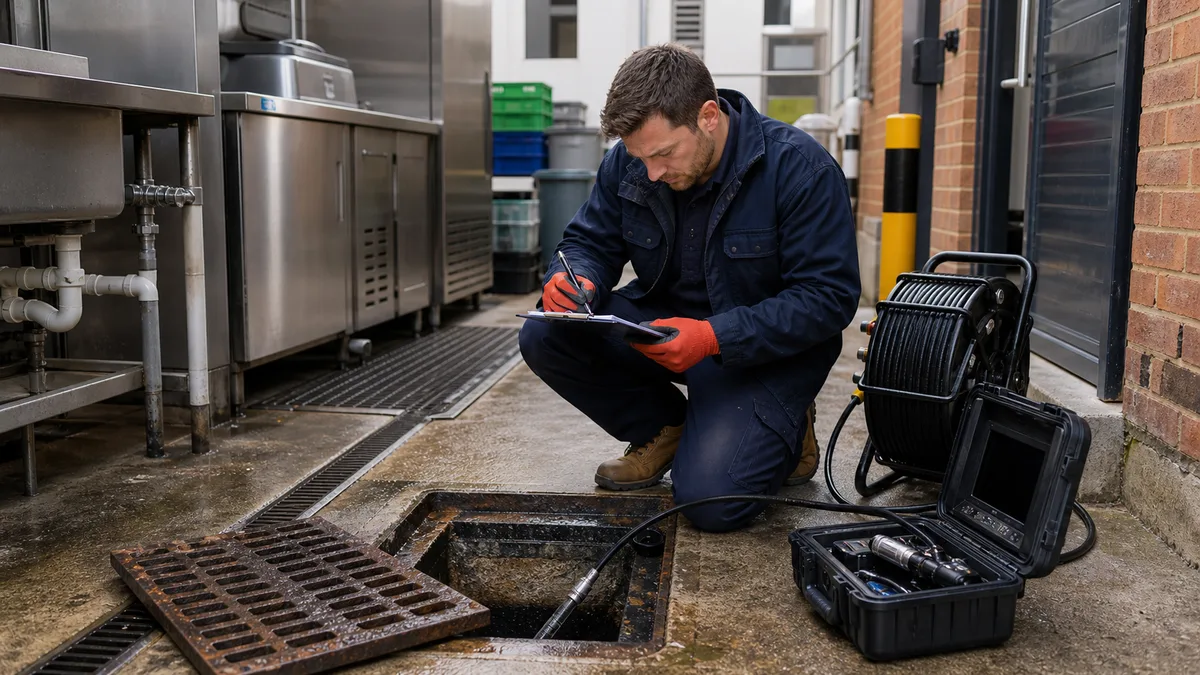
A restaurant’s drainage system handles food waste, fats, oils, grease, and hot water at volumes that would overwhelm a domestic drain in weeks. Most restaurants manage drainage reactively — calling out when something blocks. However, by the time a restaurant drain blocks during service, the cost is already significant: emergency callout charges, service disruption, potentially a kitchen closure, and the reputational damage of turning covers away.
A planned maintenance contract prevents all of this. Here are the seven signs that ad-hoc callouts are no longer sufficient.
1. You’ve had more than one callout in a six-month period
However, a single emergency drain clearance is bad luck. Two in six months is a pattern. Each callout costs £150–£400 depending on time of day and complexity. A quarterly maintenance contract covering high-pressure jetting and inspection typically costs less than two emergency callouts — and prevents them.
2. Drains slow during peak service
Additionally, if kitchen or pot-wash drains drain slowly during busy periods — when flow rates are highest — you have a partial blockage that restricts capacity under load but does not yet fully block. This will worsen. The threshold from “slow during service” to “blocked during service” is usually a matter of weeks. Preventive jetting at this stage is far cheaper than a blocked drain during a Saturday evening service.
3. You have a grease trap that has not been serviced in over 3 months
Specifically, grease interceptors and traps require regular emptying and cleaning to function correctly. A full grease trap bypasses its purpose entirely — grease passes through into the drainage system and builds up downstream. Local authority environmental health officers treat overflowing grease traps as a breach of trade effluent consent. Quarterly servicing is the minimum for a high-volume kitchen.
4. You can smell drains in the kitchen or dining area
For example, drain odours in a food preparation or dining area are a direct food hygiene risk under HACCP principles. They indicate either a blocked drain, a dry trap, or a cracked underground pipe allowing sewer gases to enter the building. Any of these requires professional investigation. Environmental health inspectors treat persistent drain odours as a potential Category 2 contaminant risk.
5. You have trees or planting near the kitchen drain run
As a result of the warm, nutrient-rich conditions in restaurant drain pipes, root ingress is faster in commercial drains than in domestic ones. Trees within 10 metres of underground drain runs should trigger an annual CCTV drain survey at minimum. Root ingress detected early is cleared by mechanical cutting and jetting. Detected after collapse, it requires excavation.
6. Your drains are more than 20 years old without a survey
Furthermore, commercial drains receive far more mechanical and thermal stress than domestic ones. Hot, fat-laden discharge, heavy volumes, and floor-level gully connections all accelerate the deterioration of pipe joints and materials. A drain that has never been surveyed in 20 years of commercial use almost certainly has condition issues that are not yet symptomatic — but will be.
7. Your insurance requires evidence of drainage maintenance
In particular, commercial property insurers increasingly require documented maintenance records as a condition of cover for drainage damage claims. A maintenance contract with a professional drainage company provides exactly this documentation. Without it, a claim for flood damage resulting from a blocked drain may be contested on the grounds of failure to maintain.
What a commercial maintenance contract includes
Consequently, a planned maintenance contract from Drains Cleared typically covers quarterly or biannual high-pressure jetting of kitchen and floor drains, grease trap inspection, written service logs, and priority callout rates if emergency intervention is required between scheduled visits.
Similarly, for a contract quotation based on your site size and service volume, call 0333 772 0123 or book online.