- Victorian property
- old plumbing
- clay pipes
- lead pipes
10 Hidden Plumbing Problems in Victorian Properties
Victorian homes have character — and drainage systems that predate modern standards by 150 years. These 10 hidden problems are what surveyors and engineers find most often.
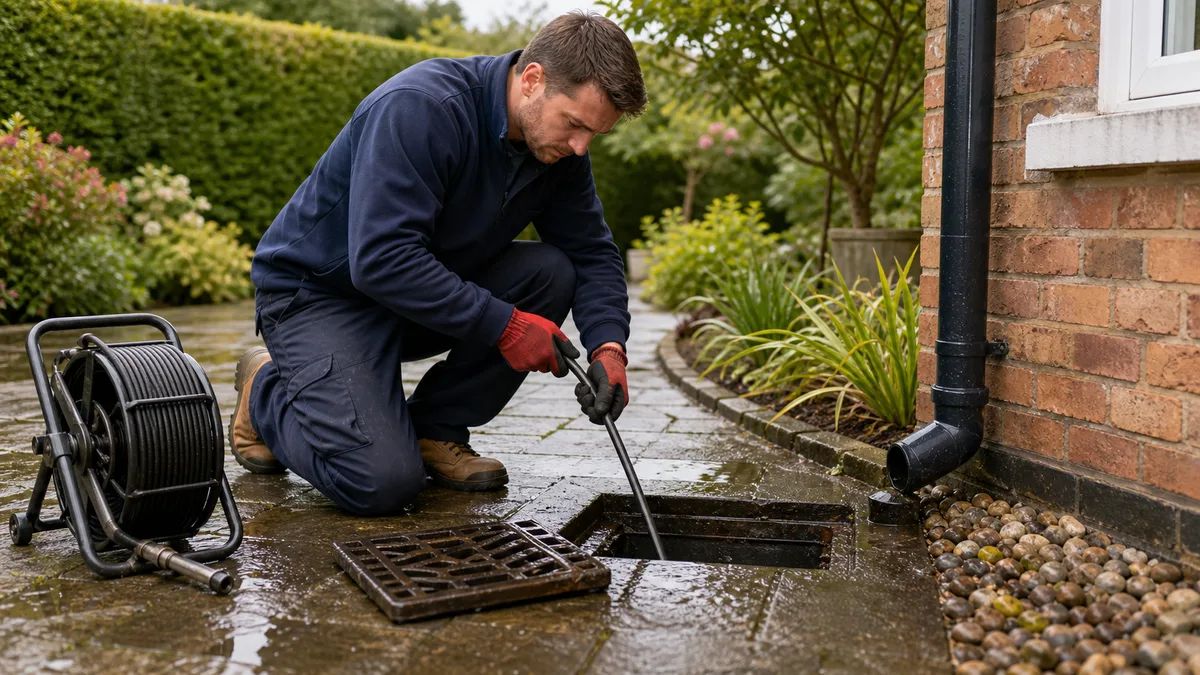
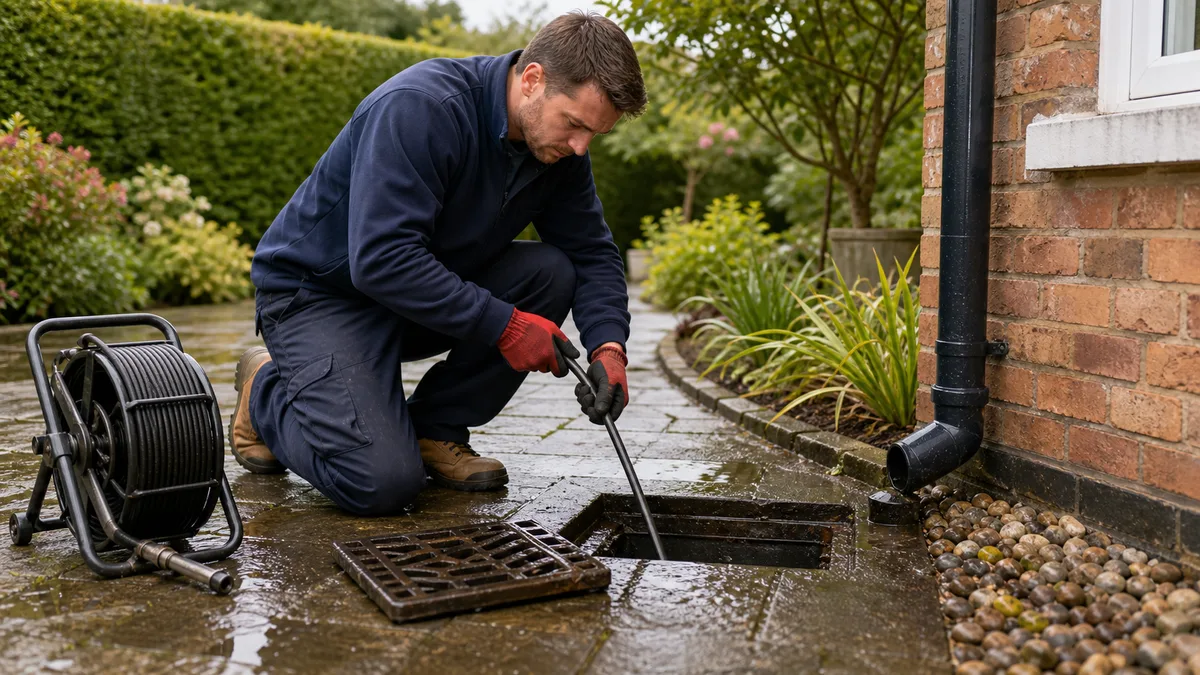
Victorian properties — built roughly between 1837 and 1901 — contain some of the most desirable housing stock in the UK. They also contain plumbing and drainage systems that were installed before most modern materials and standards existed. Many have been partially updated over the decades, creating mixed-era systems where new connections meet 150-year-old infrastructure.
Here are the ten hidden problems that drainage engineers and plumbers find most regularly in Victorian properties.
1. Clay drainage pipes with open-jointed connections
However, Victorian clay pipes were jointed with sand and cement or run loose in the ground. These joints fail over time through ground movement and root pressure. Open joints allow root ingress, allow drain water to escape into the surrounding soil, and allow groundwater to enter the pipe — which carries silt that gradually accumulates. A CCTV drain survey is the only way to assess the condition of buried clay drainage.
2. Lead supply pipes
Additionally, lead supply pipes were standard in Victorian construction. Since the 1986 Local Government Act, water companies have replaced many external lead sections, but the internal pipework from the boundary stopcock into the house may still be lead — particularly under the pavement approach and inside the kitchen. Lead is a neurotoxin with no safe exposure level. Water companies offer lead pipe replacement grants in some areas. A plumber can identify lead by its soft, dull grey appearance and its tendency to be slightly bent rather than running in straight lines.
3. No waste ventilation (no soil vent pipe)
Specifically, early Victorian properties often have no soil vent pipe — or have one that was added retrospectively and terminates at an incorrect height or location. Without proper venting, flushing creates negative pressure in the drainage stack that sucks water from trap seals, allowing sewer gases into the property. Persistent drain smells in Victorian properties are frequently a venting problem rather than a blockage.
4. Combined drainage (foul and surface water in the same pipe)
For example, Victorian sewers commonly combined foul and surface water drainage in a single pipe — an arrangement that modern building regulations prohibit for new work but that remains in many older systems. Combined drainage means that in heavy rain, surface water can push sewer gases or sewage back through the system. It is also a problem if you need to extend drainage: new connections must be correctly segregated.
5. Very small bore waste pipes
As a result of Victorian plumbing standards, internal waste pipes (serving baths, basins, and sinks) were often laid in 1¼ inch or 1½ inch imperial bore — smaller than the 40mm and 50mm metric equivalents used today. These pipes block faster and more easily than modern equivalents. Replacing them often reveals that fittings in Victorian properties used non-standard sizes that require specific parts.
6. Soil pipe running inside the building
Furthermore, in many Victorian terraces, the soil stack (the main vertical drain pipe) runs inside the building — sometimes boxed in, sometimes behind plasterwork. Internal soil stacks are inaccessible for inspection and deteriorate without visible signs. Cast iron stacks (the original material in most Victorian properties) corrode from the inside and can fail without warning. Boxed-in stacks that develop leaks often cause hidden structural damage before the problem is discovered.
7. Undersized inspection chambers
In particular, Victorian inspection chambers were built in brick with benching mortar to guide flow. Over 150 years, this mortar deteriorates, benching collapses, and chambers fill with sediment. A partially silted chamber restricts flow and creates conditions where blockages form more easily. Chamber liners and refurbishment are available without excavation in most cases.
8. The drainage system has never been surveyed
Consequently, a property that has changed hands multiple times over 150 years may have no record of any drainage work except recent reactive repairs. Root ingress that has been growing for 20 years, a partially collapsed section that was always “just slow,” and two or three sections of pipe in different materials spliced together without proper connections are all common findings in first-time surveys of Victorian properties.
9. Galvanised steel hot water pipes
Similarly, Victorian and Edwardian properties used galvanised steel for hot water pipes. These corrode from the inside and produce scale flakes that collect in the system, reduce flow, and eventually cause pinhole leaks. Rust-coloured hot water, low hot water pressure, and intermittent heating are the typical symptoms. Replacement with copper or plastic is the only long-term solution.
10. Non-existent or inadequate trap seals
Moreover, Victorian-era traps were designed for conditions without sealed drainage systems and without the ventilation standards that modern systems rely on. Many are the old “D-trap” or “P-trap” style that has been partially replaced over the years and no longer seals correctly. If you are managing persistent drain smells without a clear blockage cause, the trap seals are worth inspecting before the drainage system is surveyed.
Starting point for a Victorian property
However, the most useful single action for a Victorian property that has not been investigated is a CCTV drain survey. It maps what is in the ground, identifies defect grades, and provides the baseline information needed to prioritise repairs. Combined with a visual plumbing inspection above ground, it reveals what you are managing — and what can be deferred versus what needs immediate attention.
Call 0333 772 0123 or book online to arrange a survey.