Drains Cleared
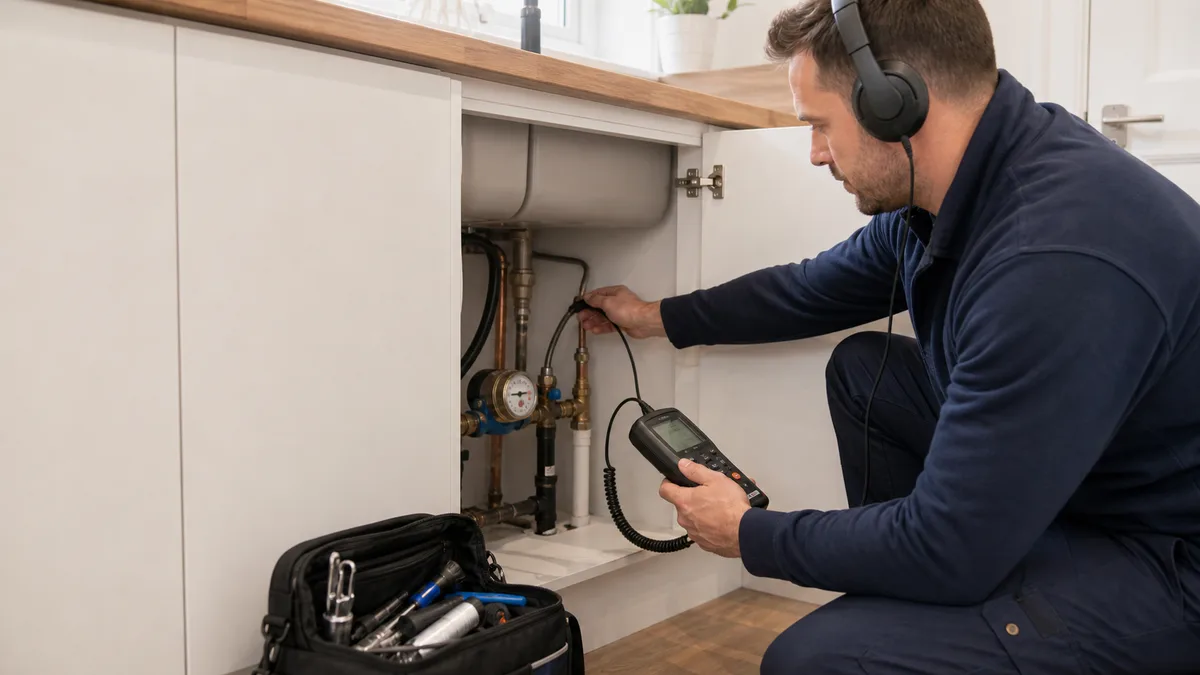
Leak detection engineer using acoustic equipment inside a home

Leak Detection in Cheshunt: Find Hidden Leaks Without Disruption

We detect before we destroy — our non-invasive techniques mean your walls and floors stay intact even when the leak is buried deep. Serving EN8, EN9, EN10, EN11.
EN8EN9EN10EN11
0333 772 0123
We route to vetted local engineers covering EN8, EN9, EN10 and EN11 with a 60-minute response target for drain emergencies across Cheshunt and the surrounding area.

Leak Detection in Cheshunt

Cheshunt's combined sewerage system puts older properties at risk of surcharge during heavy rain, while the area's significant Victorian and Edwardian housing stock often hides copper-pipe corrosion from hard water. In postcode EN8 and surrounding areas, pin-hole leaks in heating systems are common but invisible until they cause serious water damage. Acoustic and thermal detection finds these leaks without excavation.

Leak detection in Cheshunt uses acoustic loggers and thermal imaging to find hidden water escapes in copper pipes, heating systems, and underground drains without excavation. Insurance-approved trace-and-access in EN8–EN11 targets pin-hole corrosion, joint failures, and rising-main breaches.

Drainage in Cheshunt — what local engineers know

Anglian Water supplies Cheshunt and the surrounding Broxbourne area with naturally hard water—a primary driver of pin-hole corrosion in copper pipes and limescale accumulation in boilers. The area's combined sewerage infrastructure, particularly in older postcodes like EN8, means surface water and foul drainage share pipes, increasing leak-related surcharge risk during downpours. Victorian and Edwardian properties with clay soil pipes compound this: joint displacement and root ingress are frequent findings in CCTV surveys across Cheshunt. Rising mains and under-floor leaks in basements remain a persistent issue in this mixed property demographic.

  • Hard water supply causes limescale accumulation in boilers, radiators and soil pipe joints — powerflush and descaling demand is high across Cheshunt
  • Combined sewerage infrastructure — common in older parts of Cheshunt — means foul and surface water share the same pipe, increasing surcharge risk during heavy rainfall
  • Large Victorian and Edwardian housing stock in Cheshunt means clay soil pipes and brick-built inspection chambers are common — CCTV surveys frequently reveal root ingress and joint displacement

What happens when you call us in Cheshunt

  1. 1 Immediate dispatch. We find the nearest available engineer covering EN8/EN9 and confirm the ETA before the call ends.
  2. 2 On-site diagnosis — no guessing. The engineer inspects using professional-grade equipment including CCTV where needed and quotes a fixed price before work starts.
  3. 3 Job complete, report issued. You receive a written completion report. All work is guaranteed — same fault returns within the guarantee period, we come back free.

About drainage in Cheshunt

Local facts our engineers use when they arrive.

Population
10,000
Postcode districts
EN8EN9EN10EN11
Council
Broxbourne
Water authority
Anglian Water
Flood risk
Low — affected watercourses: River Mersey, River Irwell, River Ribble
Property mix
Victorian 30%
Edwardian 14%
Interwar 20%
Postwar 22%
Modern 14%
Sewer type combined
Common local issues
Hard water supply causes limescale accumulation in boilers, radiators and soil pipe joints — powerflush and descaling demand is high across CheshuntCombined sewerage infrastructure — common in older parts of Cheshunt — means foul and surface water share the same pipe, increasing surcharge risk during heavy rainfallLarge Victorian and Edwardian housing stock in Cheshunt means clay soil pipes and brick-built inspection chambers are common — CCTV surveys frequently reveal root ingress and joint displacement

This information helps our engineers arrive prepared.

Illustrative example of typical work

Copper Corrosion in a Victorian Terrace, Cheshunt EN8

Area:
Cheshunt
Service:
Leak Detection

A homeowner in EN8 noticed damp patches appearing on bedroom ceilings—no visible water damage upstairs, but heating was losing pressure. Thermal imaging revealed pin-hole leaks in 28-year-old copper heating pipework, likely accelerated by Anglian Water's hard water supply. Trace-and-access was approved by the homeowner's insurer, and the affected section was replaced without tearing into plasterwork.

This describes typical work performed by engineers in our network. Names and specific details have been omitted to protect customer privacy.

Leak Detection in Cheshunt — FAQs

Why is my copper heating pipework leaking in Cheshunt?
Anglian Water's hard water supply causes pin-hole corrosion in copper, especially in systems over 20 years old. Calcium and magnesium ions create acidic water that eats tiny holes in pipes. Acoustic leak detection pinpoints these before they cause major damage.
What's the risk from Cheshunt's combined sewers?
Combined sewerage means foul and surface water share the same underground pipe. During heavy rain, blockages or leaks in this shared system can cause surcharge—water backing up into basements or gardens. Leak detection on rising mains and under-floor drains is essential in older postcodes like EN8.
Does my insurance cover leak detection in Cheshunt?
Most household policies cover trace-and-access once a leak is confirmed by acoustic or thermal imaging. This limits unnecessary excavation. Bring detection results to your insurer before any remedial work begins.
How do you find a leak without digging?
A combination of acoustic listening sticks, thermal cameras, moisture mapping and inert tracer-gas injection lets us triangulate a leak to within a few centimetres before any opening-up is needed.
Will my insurance cover the cost?
Most UK home-insurance policies include 'trace and access' cover for leak detection. We bill the insurer directly on approved claims.
What leaks can you find?
Mains supply leaks, central heating leaks, hot and cold pipework, underfloor heating, shower-tray leaks, and concealed waste-pipe leaks.
How long does a leak-detection visit take?
Typically 1-3 hours on site, followed by a written report within 48 hours suitable for insurance submission.

Leak Detection near Cheshunt

We cover towns within and around Cheshunt. Click a town to see local engineer availability.

Ready to book in Cheshunt?

We route to vetted local engineers covering EN8, EN9, EN10 and EN11 with a 60-minute response target for drain emergencies across Cheshunt and the surrounding area.

0333 772 0123