Leak Detection in Garforth
Undetected leaks in Garforth properties can waste thousands of gallons annually and inflate water bills from Yorkshire Water across LS25, LS26, LS27 and LS28. Garforth's Victorian properties—built with copper and cast-iron pipework—develop pinhole corrosion from soft, slightly acidic water supplied by Yorkshire Water. Modern Garforth homes with plastic pipes face different failures: root penetration from the town's tree-lined streets and UV degradation of external surface water runs. Professional leak detection in Garforth pinpoints hidden leaks before they cause structural damage.
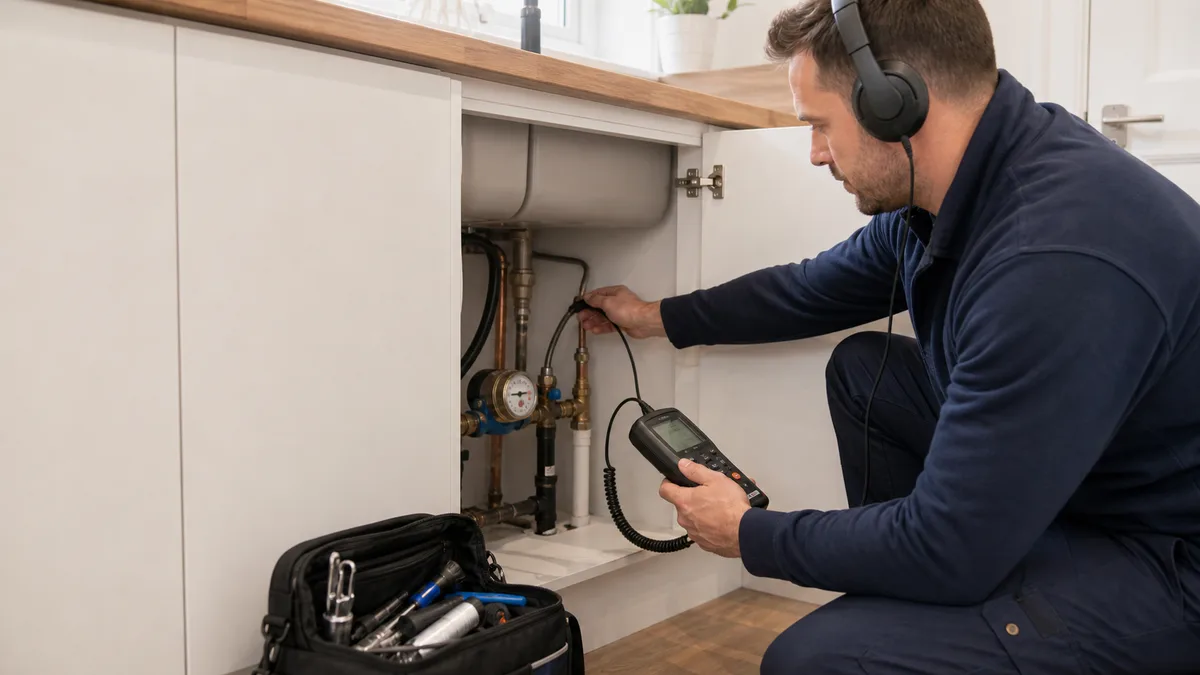
Leak detection in Garforth targets pinhole corrosion in Victorian copper (accelerated by soft water) and root penetration in modern plastic pipes. Acoustic and thermal imaging technology pinpoints leaks in LS25–LS28 properties without excavation. Early detection in Garforth prevents water waste, avoids structural damage, and reduces Yorkshire Water billing.
Drainage in Garforth — what local engineers know
Yorkshire Water's softened water supply to Garforth has reduced limescale problems but accelerates corrosion of copper and lead solder in Victorian Garforth plumbing—pinhole leaks typically develop after 30–40 years of use. Garforth's separate sewer system means leaks into clay drain bedding (common in properties built 1880–1920) go unnoticed until differential settlement or subsidence becomes visible. Leeds City Council's water shortage advisories now mandate leak detection in Garforth properties as a water-conservation measure. Thermal imaging and acoustic listening equipment can pinpoint leaks in Garforth properties without excavation, preventing damage to the town's Victorian frontages and listed structures.
- Soft water supply reduces limescale, but slightly acidic pH can accelerate corrosion of copper fittings and lead joints in older Garforth properties
- Separate sewer system across most of Garforth: misconnections (e.g. washing machines plumbed into surface water drains) are a known local issue and can result in environmental enforcement action
- High flood risk in Garforth: basement and ground-floor properties near watercourses are vulnerable to sewer backflow — non-return valve installation is strongly recommended
- With 32% of properties built before 1920, salt-glazed clay drainage and lead-solder copper pipework are common — pipe collapse, root ingress and joint failure are recurring call-out drivers.
What happens when you call us in Garforth
- 1 Immediate dispatch. We find the nearest available engineer covering LS25/LS26 and confirm the ETA before the call ends.
- 2 On-site diagnosis — no guessing. The engineer inspects using professional-grade equipment including CCTV where needed and quotes a fixed price before work starts.
- 3 Job complete, report issued. You receive a written completion report. All work is guaranteed — same fault returns within the guarantee period, we come back free.