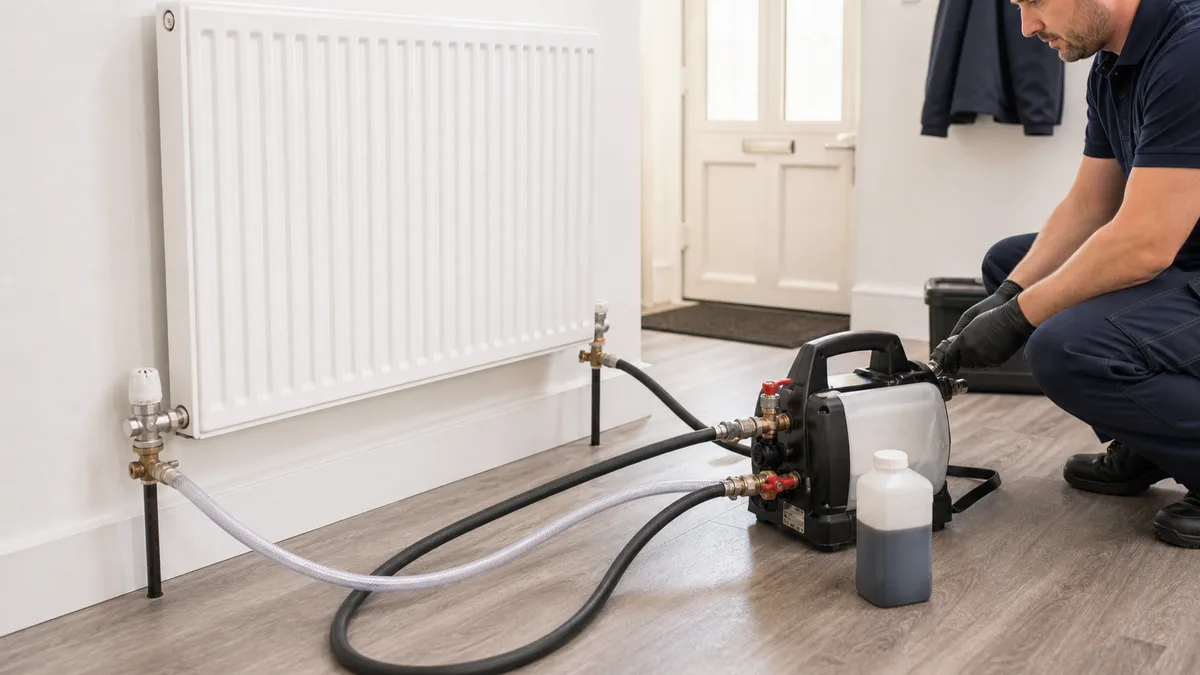
Powerflush in Exmouth
Exmouth's soft-water supply from South West Water prevents limescale accumulation, yet properties across EX8, EX9, EX10, and EX11 still accumulate magnetite sludge—particularly in homes with original 1970s–1980s radiators and pipework. A powerflush in Exmouth clears iron oxide debris, restores heat output to underperforming radiators, and extends boiler life by 5–10 years. Older heating systems throughout Exmouth become efficiency drains without periodic flushing.
Powerflush removes magnetite sludge from heating systems, improving boiler efficiency and radiator output. Exmouth's soft-water supply prevents limescale but not iron oxide buildup. Systems over 15 years old (common across EX8, EX9, EX10, EX11) should be flushed every 5–10 years to maintain performance and extend boiler life.
Drainage in Exmouth — what local engineers know
Exmouth's 28% modern housing stock benefits from newer heating systems, but the remaining 62% consists of Victorian, Edwardian, and 1960s–1980s properties—many retrofitted with gas or oil boilers during the 1980s–1990s. These systems accumulate decades of sludge from oxidation in ferrous pipes and cast-iron radiators. East Devon Council area has poor mains gas penetration in rural zones, so oil-fired systems are prevalent; sludge in oil boiler circuits causes nozzle blockage and incomplete combustion. While South West Water's soft supply benefits heating systems, sludge must still be flushed periodically to prevent efficiency loss across Exmouth.
- Soft water supply reduces limescale, but slightly acidic pH can accelerate corrosion of copper fittings and lead joints in older Exmouth properties
- Separate sewer system across most of Exmouth: misconnections (e.g. washing machines plumbed into surface water drains) are a known local issue and can result in environmental enforcement action
- High flood risk in Exmouth: basement and ground-floor properties near watercourses are vulnerable to sewer backflow — non-return valve installation is strongly recommended
- Granite and clay geology around Exmouth creates challenging excavation conditions for drain repairs and makes rodding clearances more complex
- With 28% of properties built before 1920, salt-glazed clay drainage and lead-solder copper pipework are common — pipe collapse, root ingress and joint failure are recurring call-out drivers.
What happens when you call us in Exmouth
- 1 Immediate dispatch. We find the nearest available engineer covering EX8/EX9 and confirm the ETA before the call ends.
- 2 On-site diagnosis — no guessing. The engineer inspects using professional-grade equipment including CCTV where needed and quotes a fixed price before work starts.
- 3 Job complete, report issued. You receive a written completion report. All work is guaranteed — same fault returns within the guarantee period, we come back free.