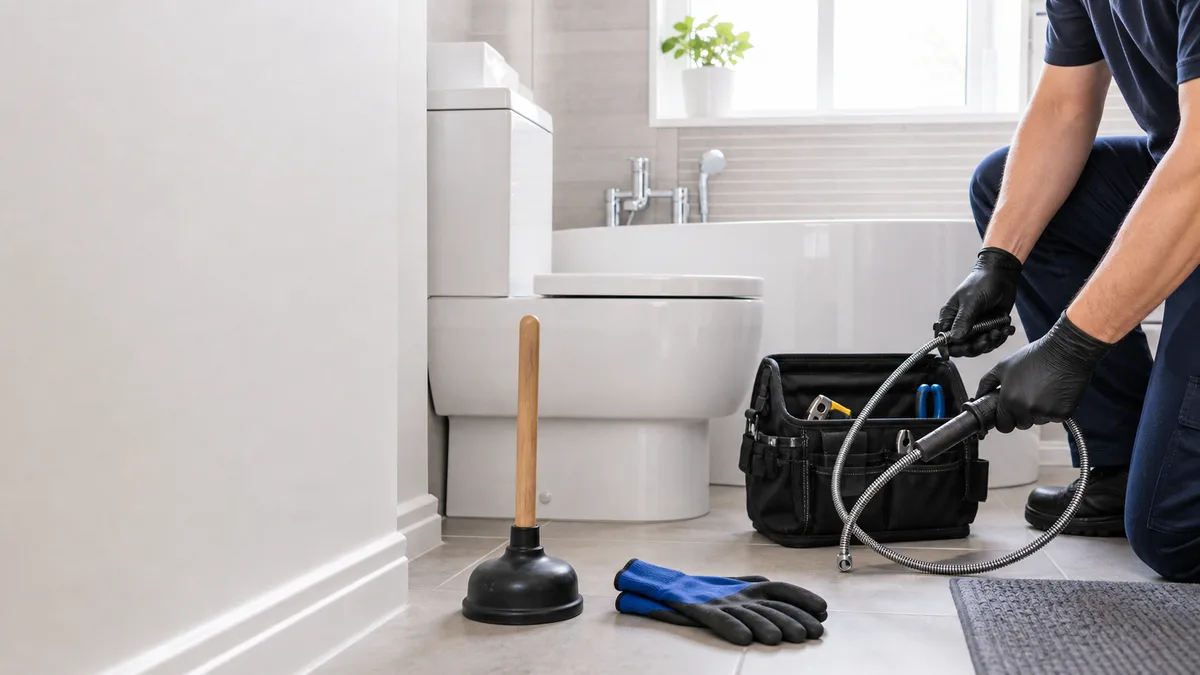
Blocked Toilets in Colwyn Bay
Colwyn Bay's combined sewerage system and soft-water supply create specific toilet challenges. Properties across LL29, LL30, LL31, and LL32 rely on Victorian and Edwardian cistern designs that corrode faster in soft, slightly acidic water—a characteristic of Welsh Water's supply. When high-level or low-level cisterns develop leaks or valve failures, the soft water has often already weakened copper fittings and lead joints, making Colwyn Bay toilet repairs more complex than in hard-water regions.
Toilet repairs in Colwyn Bay (LL29–LL32) often involve cistern replacement due to corrosion from Welsh Water's soft supply. High-level cisterns—common in Victorian terraces—are particularly vulnerable. Modern replacements improve reliability, efficiency, and reduce water waste in Colwyn Bay properties.
Drainage in Colwyn Bay — what local engineers know
Colwyn Bay is served by Welsh Water for both supply and sewerage. Conwy Council manages local building standards and enforcement. The combined sewer infrastructure—still common in Victorian terraces across Colwyn Bay—carries foul and surface water through a single pipe, increasing surcharge risk during storms. Welsh Water's naturally soft water reduces limescale but accelerates corrosion of older brass valves, ballcocks, and solder joints. High-level cisterns (still present in many Colwyn Bay properties built before 1960) are particularly prone to copper pipe deterioration.
- Soft water supply reduces limescale, but slightly acidic pH can accelerate corrosion of copper fittings and lead joints in older Colwyn Bay properties
- Combined sewerage infrastructure — common in older parts of Colwyn Bay — means foul and surface water share the same pipe, increasing surcharge risk during heavy rainfall
- Ageing infrastructure in parts of Colwyn Bay means drain blockages from grease, wipes and root ingress remain the most common call-out reasons
- With 36% of properties built before 1920, salt-glazed clay drainage and lead-solder copper pipework are common — pipe collapse, root ingress and joint failure are recurring call-out drivers.
What happens when you call us in Colwyn Bay
- 1 Immediate dispatch. We find the nearest available engineer covering LL29/LL30 and confirm the ETA before the call ends.
- 2 On-site diagnosis — no guessing. The engineer inspects using professional-grade equipment including CCTV where needed and quotes a fixed price before work starts.
- 3 Job complete, report issued. You receive a written completion report. All work is guaranteed — same fault returns within the guarantee period, we come back free.