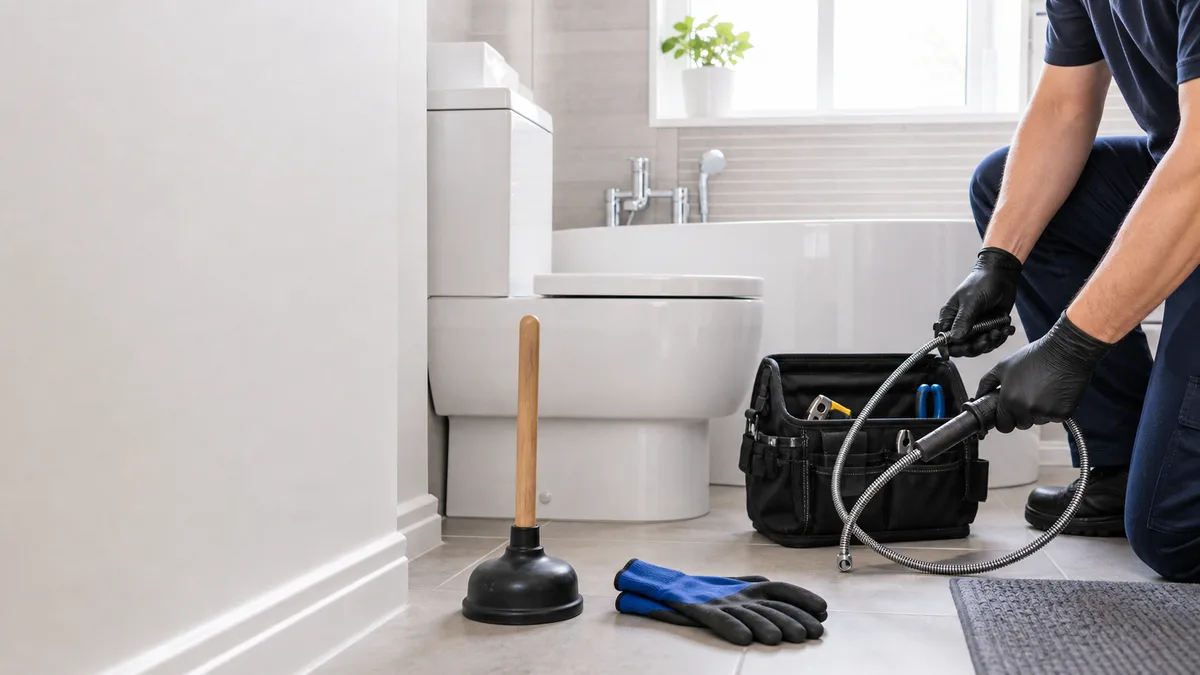
Blocked Toilets in Plymouth
Toilets in Plymouth fall into two broad categories: high-level and low-level cisterns in Victorian and Edwardian terraces (30%+ of housing stock), and modern close-coupled units in newer builds. South West Water's soft-water supply affects flush efficiency and syphon durability, requiring specialist knowledge of how Plymouth's water chemistry impacts ceramic and rubber components. Toilet repair and replacement in Plymouth ranges from simple syphon renewal to full cistern and pan installation.
Plymouth's toilet types vary by property age: Victorian terraces have high-level cisterns, Edwardian homes favour low-level suites, modern properties use close-coupled units. South West Water's soft supply accelerates seal and syphon degradation. Toilet repairs in Plymouth (PL1–PL4 postcodes) range from simple syphon renewal to full suite replacement.
Drainage in Plymouth — what local engineers know
Plymouth Council oversees a diverse housing stock: approximately 30% Victorian, 14% Edwardian, and 14% modern properties spread across postcodes PL1–PL4. Victorian terraces typically retain high-level cisterns (wall-mounted brass or cast-iron boxes fed by exposed pipework), while Edwardian properties more often feature low-level suites with pull-chains. South West Water's soft water means syphons and rubber seals degrade faster in Plymouth than in hard-water areas, due to lack of mineral film protection. Older close-coupled units (1980s–2000s) commonly develop phantom flush and running-water issues. Combined sewerage in many older Plymouth areas also means toilet blockages can be compounded by surface-water backing up during heavy rain.
- Soft water supply reduces limescale, but slightly acidic pH can accelerate corrosion of copper fittings and lead joints in older Plymouth properties
- Combined sewerage infrastructure — common in older parts of Plymouth — means foul and surface water share the same pipe, increasing surcharge risk during heavy rainfall
- Large Victorian and Edwardian housing stock in Plymouth means clay soil pipes and brick-built inspection chambers are common — CCTV surveys frequently reveal root ingress and joint displacement
What happens when you call us in Plymouth
- 1 Immediate dispatch. We find the nearest available engineer covering PL1/PL2 and confirm the ETA before the call ends.
- 2 On-site diagnosis — no guessing. The engineer inspects using professional-grade equipment including CCTV where needed and quotes a fixed price before work starts.
- 3 Job complete, report issued. You receive a written completion report. All work is guaranteed — same fault returns within the guarantee period, we come back free.