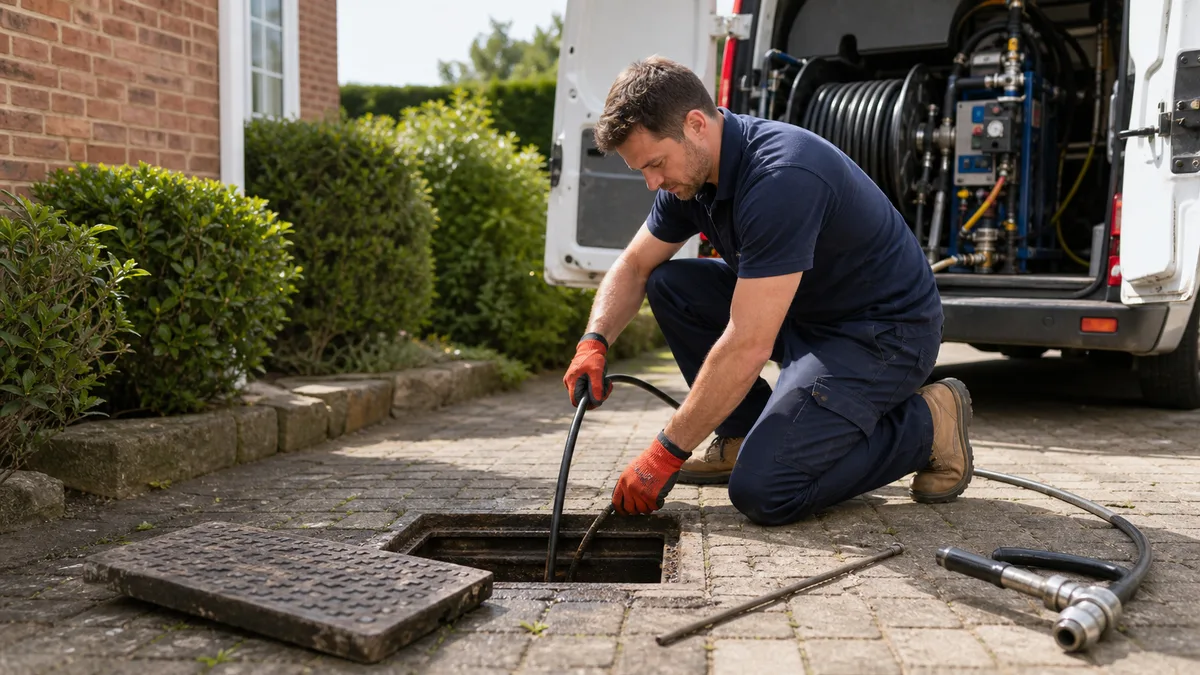
Blocked Drains in Wolverhampton
Wolverhampton's Victorian and Edwardian housing stock sits on combined sewerage infrastructure—where foul water and surface runoff share the same pipe. During heavy rain, this shared system creates blockage-prone conditions, particularly in postcode areas WV1 and WV2. Our specialists understand how Wolverhampton's aging pipes respond to seasonal flooding and everyday debris accumulation.
Blocked drains in Wolverhampton stem from hard water deposits, debris in century-old combined sewers, and poor pipe gradient. WV1–WV4 postcodes experience especially high blockage frequency during autumn and winter. Severn Trent's hard water supply accelerates mineral scaling; combined sewer surcharge adds seasonal pressure.
Drainage in Wolverhampton — what local engineers know
Severn Trent Water manages water supply across Wolverhampton, and the local authority—Wolverhampton Council—enforces drainage standards for the combined sewer system inherited from Victorian expansion. Hard water through Wolverhampton's supply accelerates mineral buildup in soil pipes, compounding blockage severity. The combined sewer design means surface water and foul sewage compete during downpours; WV3 and WV4 postcodes in Wolverhampton experience higher surcharge risk because of topography and pipe gradient. Understanding these local hydraulic patterns allows us to diagnose recurring blockages rather than just clearing them.
- Hard water supply causes limescale accumulation in boilers, radiators and soil pipe joints — powerflush and descaling demand is high across Wolverhampton
- Combined sewerage infrastructure — common in older parts of Wolverhampton — means foul and surface water share the same pipe, increasing surcharge risk during heavy rainfall
- Moderate flood risk in parts of Wolverhampton — drainage systems near low-lying areas can surcharge after prolonged rain, and sump pump maintenance is advisable
- Large Victorian and Edwardian housing stock in Wolverhampton means clay soil pipes and brick-built inspection chambers are common — CCTV surveys frequently reveal root ingress and joint displacement
What happens when you call us in Wolverhampton
- 1 Immediate dispatch. We find the nearest available engineer covering WV1/WV2 and confirm the ETA before the call ends.
- 2 On-site diagnosis — no guessing. The engineer inspects using professional-grade equipment including CCTV where needed and quotes a fixed price before work starts.
- 3 Job complete, report issued. You receive a written completion report. All work is guaranteed — same fault returns within the guarantee period, we come back free.