Drain cleaning and unblocking
- 24/7 emergency response
- Fixed-price quotes
- Verified local engineers
- Nationwide engineer network
How we unblock drains
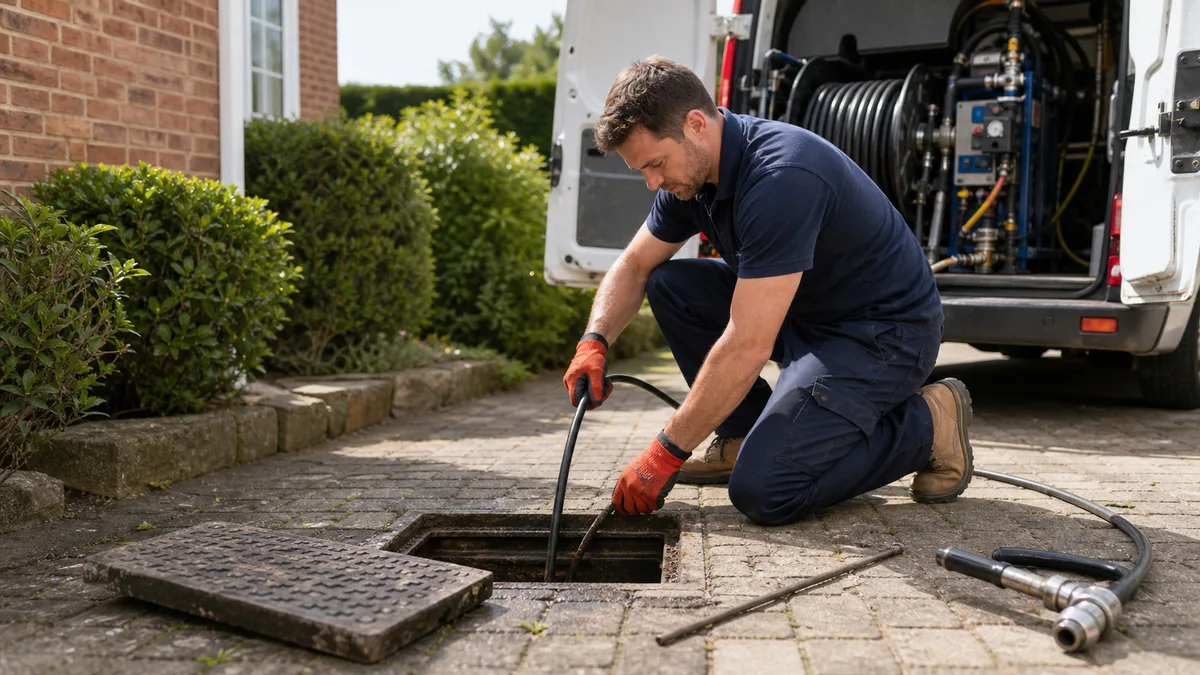
Blocked drains are the single most common drainage emergency we attend. Our engineers arrive with high-pressure jetting units, rods and inspection cameras to diagnose and clear the blockage on the first visit wherever possible. We work on foul and surface-water drains, internal gullies, outside channels and shared sewer connections. Every clearance is backed by a no-fix-no-fee guarantee and a written report so you know exactly what caused the issue.
Furthermore, our standard attendance includes high-pressure water jetting at 4,000 psi and mechanical rodding for stubborn blockages. We also run a post-clearance camera check on the affected run. As a result, you receive a written completion report showing what caused the blockage and whether any underlying pipe defect needs attention.
Specifically, we always camera the cleared run after jetting. In particular, this catches root ingress, displaced joints, and pitch fibre damage. Without this check, any of these could cause the blockage to recur within weeks. Consequently, you find out about a structural problem the same day — not after a third callout for the same fault.
What causes blocked drains?
- Fat, oil and grease (FOG). Kitchen fats are the leading cause of blockages in domestic drains. Hot fat poured down the sink cools and solidifies underground. It builds up over months until the pipe blocks entirely.
- Wet wipes and non-flushables. Despite being marketed as 'flushable', wet wipes are made of synthetic fibres that don't break down. They bind with grease in sewers to form fatbergs.
- Root ingress. Tree roots seek out the moisture in older clay pipes. Once inside, they form a dense mat that catches debris and eventually blocks the pipe.
- Collapsed or deformed pipe. Pitch fibre and old clay pipes can collapse or deform, creating a partial obstruction that catches everything passing through.
- Scale and silt build-up. In hard-water areas and surface-water drains, calcium scale and silt gradually reduce pipe bore until flow becomes restricted.
When to call a drainage engineer (not a plumber)
Plumbers handle internal pipework above ground. Drainage engineers handle underground pipe runs, soakaways, inspection chambers, and the shared sewer infrastructure. If your blockage is outside the building or affects multiple outlets simultaneously, you need a drainage engineer — not a general plumber. That said, the distinction matters less than getting the right person quickly. We confirm the type of problem during your initial call before dispatching anyone.
Signs of an underground drainage problem include multiple sinks or toilets slowing at the same time. Other indicators are water backing up through a floor drain, gurgling from several outlets, and sewage smells in the garden. As a result, if you notice any of these symptoms together, the blockage is almost certainly underground rather than in an individual trap.
Blocked drain FAQs
How quickly can you clear my blocked drain?
What does it cost to unblock a drain?
Do you guarantee the work?
What causes most blocked drains?
Will you need to dig up my garden?
Blocked drain? We'll clear it today.
No-fix-no-fee. Available 24/7.