- blocked drains
- drainage warning signs
- drain engineer
- DIY limits
10 Signs Your Drain Needs a Professional (Not Just a Plunger)
Slow drains and bad smells aren't always DIY problems. These 10 warning signs tell you when a drainage engineer is required — and why waiting makes it worse.
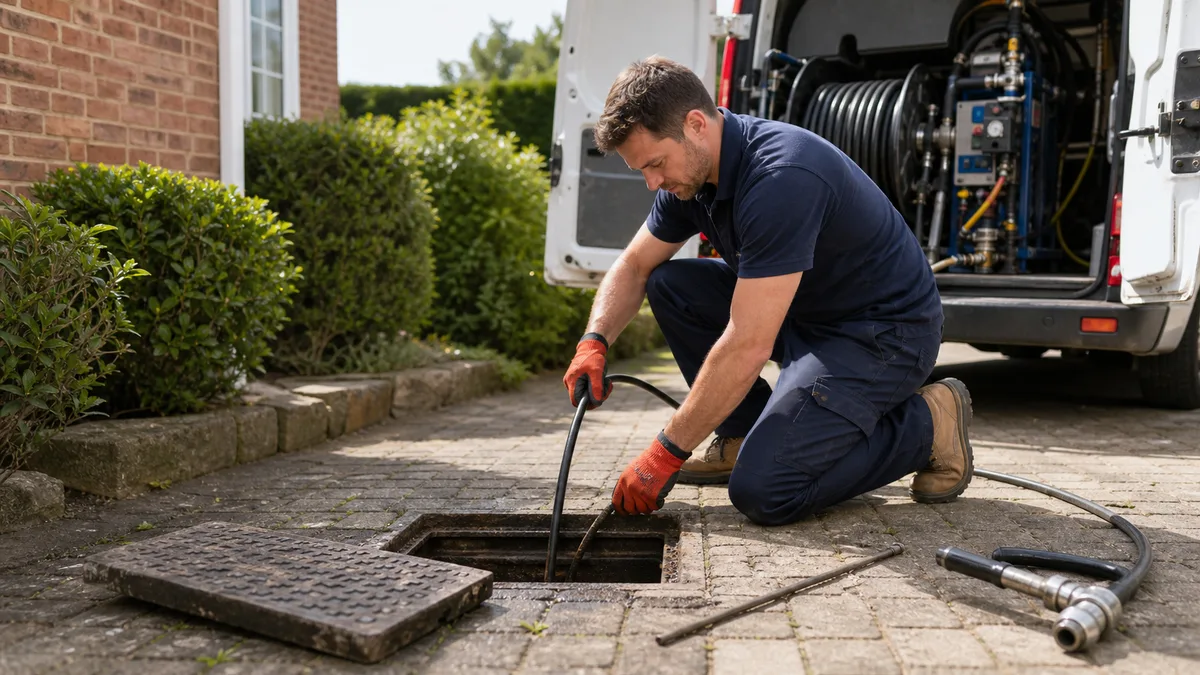
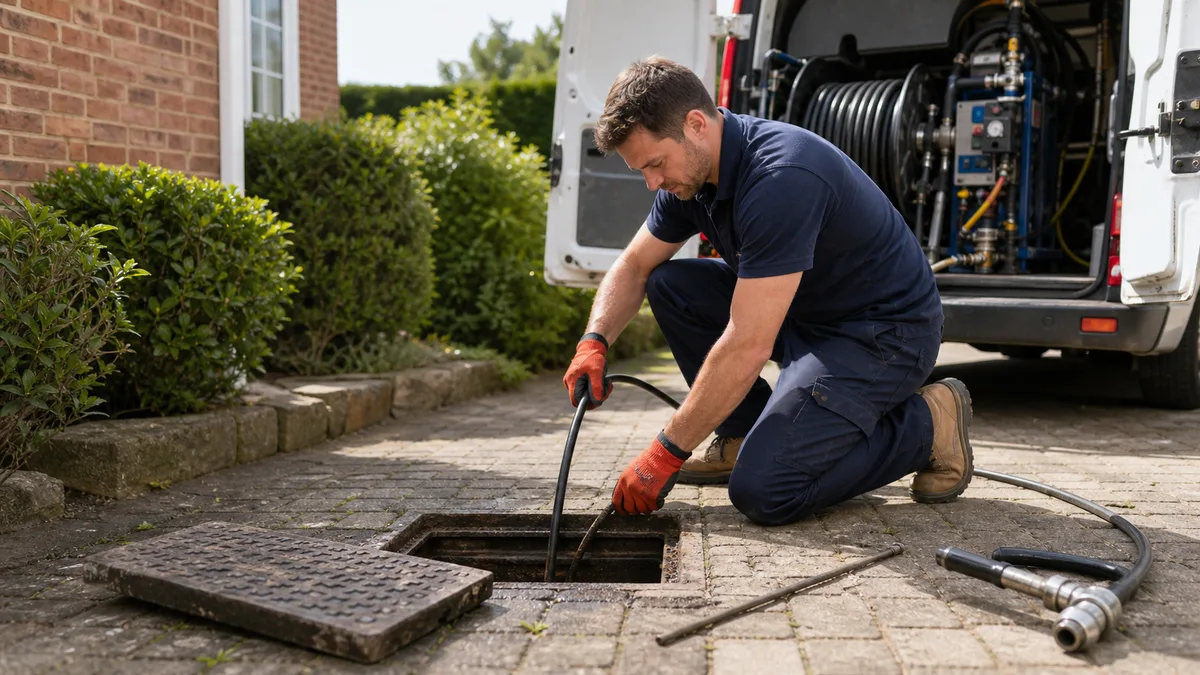
Most drainage problems give you warning before they become emergencies. The trouble is that homeowners often treat the early signs with a plunger or a bottle of chemical cleaner — and delay calling a professional until the situation is significantly worse. Here are the signs that a drainage engineer is the right call, not a longer DIY session.
1. Multiple fixtures are slow or blocked at the same time
However, when a single sink drains slowly, the blockage is usually in the individual trap or waste pipe. When two or more fixtures are affected simultaneously — toilet, basin, and bath all sluggish — the blockage is further down the shared underground drain. A plunger cannot reach it.
2. Sewage smell when no water is running
Additionally, a persistent drain smell without any water being used points to one of three things: a dry trap (easily fixed), a cracked pipe letting gases escape, or a partial blockage decomposing organic waste. Cracked pipes require a CCTV drain survey to locate.
3. Gurgling sounds from other fixtures
Specifically, when you flush a toilet and a nearby basin gurgles, or when the bath drains and you hear noise from the toilet, there is a venting problem or a partial blockage displacing air through the system. This is a structural drainage issue, not a surface blockage.
4. Water rising in the inspection chamber
For example, if you lift the manhole cover outside and find water sitting in the chamber when no water is being used, the drain downstream is blocked or restricted. This needs professional jetting — not household products.
5. The same drain blocks repeatedly
As a result, a drain that clears with a plunger and then blocks again within weeks has an underlying cause. Root ingress, a collapsed pipe section, or a persistent grease accumulation will reblock until the root cause is addressed. A CCTV survey shows exactly what is happening inside the pipe.
6. Toilet water rises before draining
Furthermore, a healthy toilet empties immediately on flushing. If the water rises toward the rim before slowly draining, there is a significant downstream restriction. This is a sign of a near-full blockage — one flush from sewage backing up into the bowl.
7. Slow drainage has worsened over months
In particular, gradual deterioration is more concerning than a sudden blockage. A sudden blockage is usually a physical object or a grease event. Progressive slowness typically indicates pipe deformation (common with pitch fibre pipes), root ingress, or scale buildup — none of which respond to jetting alone without investigation.
8. You can see a crack or joint separation in visible pipework
Consequently, any visible crack, displaced joint, or collapsed section in accessible pipework requires a professional repair. Temporary sealing with tape or putty will fail quickly under wastewater flow.
9. Damp patches on walls or ceilings near drains
Similarly, unexplained damp that follows the route of buried or hidden pipework suggests a leaking underground or concealed pipe. This will not self-heal. Leak detection and professional repair are required before the structural damage spreads.
10. The drain is more than 30 years old and has never been surveyed
Moreover, clay pipes installed before 1970 and pitch fibre pipes from 1945–1975 are at or past their service life. If your property has never had a CCTV drain survey and the drainage system is this old, you are almost certainly managing problems you are not yet aware of.
When to act
However, the right time to call a drainage engineer is when you recognise any one of the signs above — not after multiple DIY attempts have failed. Early intervention is cheaper, less disruptive, and prevents the most serious outcomes: sewage in the property, structural damage, and insurance complications.
Call 0333 772 0123 or book online for a same-day assessment.