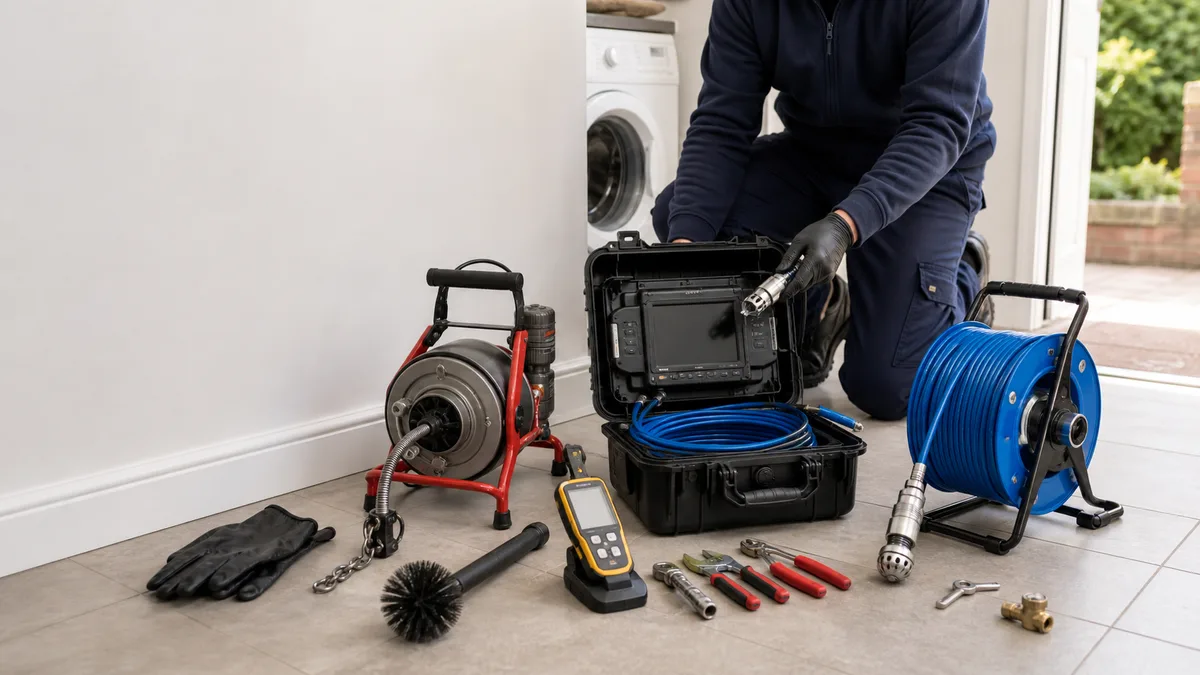
Drain Jetting in Sheerness
Sheerness' commercial kitchen sector and high-density rental market in ME13 and ME14 demand regular drain maintenance to avoid costly blockages and enforcement action. Southern Water's hard-water supply deposits grease and scale rapidly in restaurant extraction systems, while Swale Council environmental health standards require grease trap certification. Planned maintenance prevents shutdowns and legal liability.
Drain maintenance in Sheerness involves planned grease trap emptying, chemical jetting, misconnection inspection and hardwater scale removal. Commercial kitchens must maintain drains every 4–8 weeks to meet Swale Council and Southern Water standards. Rental properties require quarterly checks to prevent tenant-caused blockages and enforce Swale Council compliance.
Drainage in Sheerness — what local engineers know
Swale Council environmental enforcement teams conduct unannounced grease trap inspections in food businesses across Sheerness. Southern Water enforces discharge consent limits—excess grease and debris trigger pollution fines. Commercial kitchen operators and HMO landlords in ME12–ME15 face closure notices if drains block during peak service hours. Hard water from Southern Water accelerates grease and limescale interaction, requiring aggressive chemical treatment. Routine drain jetting and grease trap emptying every 4–8 weeks is standard for restaurants; rental properties require quarterly inspection to detect misconnections and tenant-caused damage.
- Hard water supply causes limescale accumulation in boilers, radiators and soil pipe joints — powerflush and descaling demand is high across Sheerness
- Separate sewer system across most of Sheerness: misconnections (e.g. washing machines plumbed into surface water drains) are a known local issue and can result in environmental enforcement action
- High flood risk in Sheerness: basement and ground-floor properties near watercourses are vulnerable to sewer backflow — non-return valve installation is strongly recommended
- Coastal salt-laden air in Sheerness accelerates corrosion of external soil stacks, pipe brackets and galvanised fittings on exposed elevations
- With 32% of properties built before 1920, salt-glazed clay drainage and lead-solder copper pipework are common — pipe collapse, root ingress and joint failure are recurring call-out drivers.
What happens when you call us in Sheerness
- 1 Immediate dispatch. We find the nearest available engineer covering ME12/ME13 and confirm the ETA before the call ends.
- 2 On-site diagnosis — no guessing. The engineer inspects using professional-grade equipment including CCTV where needed and quotes a fixed price before work starts.
- 3 Job complete, report issued. You receive a written completion report. All work is guaranteed — same fault returns within the guarantee period, we come back free.