Leak Detection in Sheerness
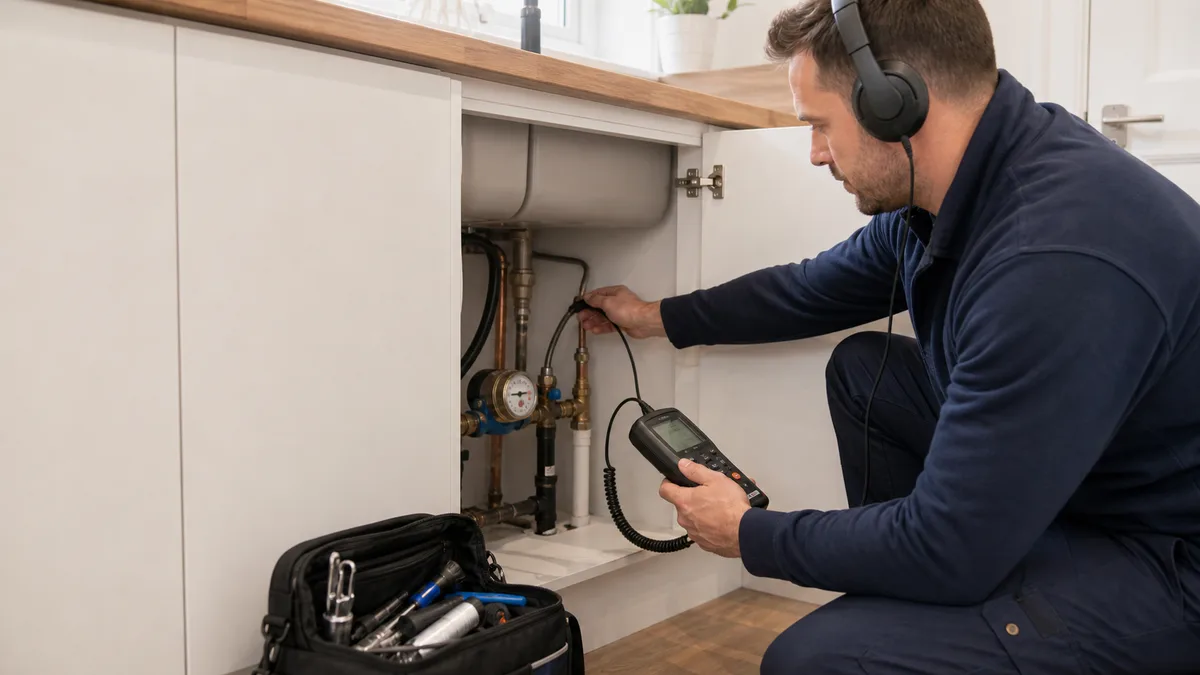
Southern Water's hard-water supply across Sheerness (ME12–ME15) causes pin-hole corrosion in copper pipes and accelerates cast-iron rust in Victorian plumbing. These microscopic leaks evade visual inspection but waste thousands of gallons annually and trigger mold in wall cavities. Professional leak detection using ultrasonic and thermal imaging reveals hidden water loss before structural damage spreads through Victorian and Edwardian homes.
Leak detection in Sheerness identifies pin-hole corrosion, hard-water damage and hidden water loss using ultrasonic and thermal imaging. Southern Water's hard-water supply corrodes copper and cast-iron pipes in 10–15 years, creating microscopic leaks that waste thousands of gallons annually. Professional diagnostics locate hidden leaks before mold and structural damage spread.
Drainage in Sheerness — what local engineers know
Southern Water supplies exceptionally hard water to Sheerness—mineral-rich supply that reacts chemically with copper pipe walls over 10–15 years. Pin-hole leaks (0.5mm diameter) appear in copper tubing, particularly in older properties across ME12, ME13 and ME14 where original 1920s–1950s pipework remains. Cast iron soil pipes corrode faster in Sheerness' damp coastal environment, creating hairline cracks invisible without endoscopic inspection. Undetected leaks waste 5,000+ gallons per month in residential properties. Hard-water deposits also block water meters, masking usage spikes. Swale Council water-loss enforcement has tightened; properties in ME15 face surcharges if leakage exceeds 10% of supplied water.
- Hard water supply causes limescale accumulation in boilers, radiators and soil pipe joints — powerflush and descaling demand is high across Sheerness
- Separate sewer system across most of Sheerness: misconnections (e.g. washing machines plumbed into surface water drains) are a known local issue and can result in environmental enforcement action
- High flood risk in Sheerness: basement and ground-floor properties near watercourses are vulnerable to sewer backflow — non-return valve installation is strongly recommended
- Coastal salt-laden air in Sheerness accelerates corrosion of external soil stacks, pipe brackets and galvanised fittings on exposed elevations
- With 32% of properties built before 1920, salt-glazed clay drainage and lead-solder copper pipework are common — pipe collapse, root ingress and joint failure are recurring call-out drivers.
What happens when you call us in Sheerness
- 1 Immediate dispatch. We find the nearest available engineer covering ME12/ME13 and confirm the ETA before the call ends.
- 2 On-site diagnosis — no guessing. The engineer inspects using professional-grade equipment including CCTV where needed and quotes a fixed price before work starts.
- 3 Job complete, report issued. You receive a written completion report. All work is guaranteed — same fault returns within the guarantee period, we come back free.