- power flush
- central heating
- boiler
- sludge
- radiators
7 Signs You Need a Power Flush (Not Just a Boiler Service)
A boiler service cleans the boiler. A power flush cleans the entire heating system. These 7 signs tell you which one your system actually needs right now.
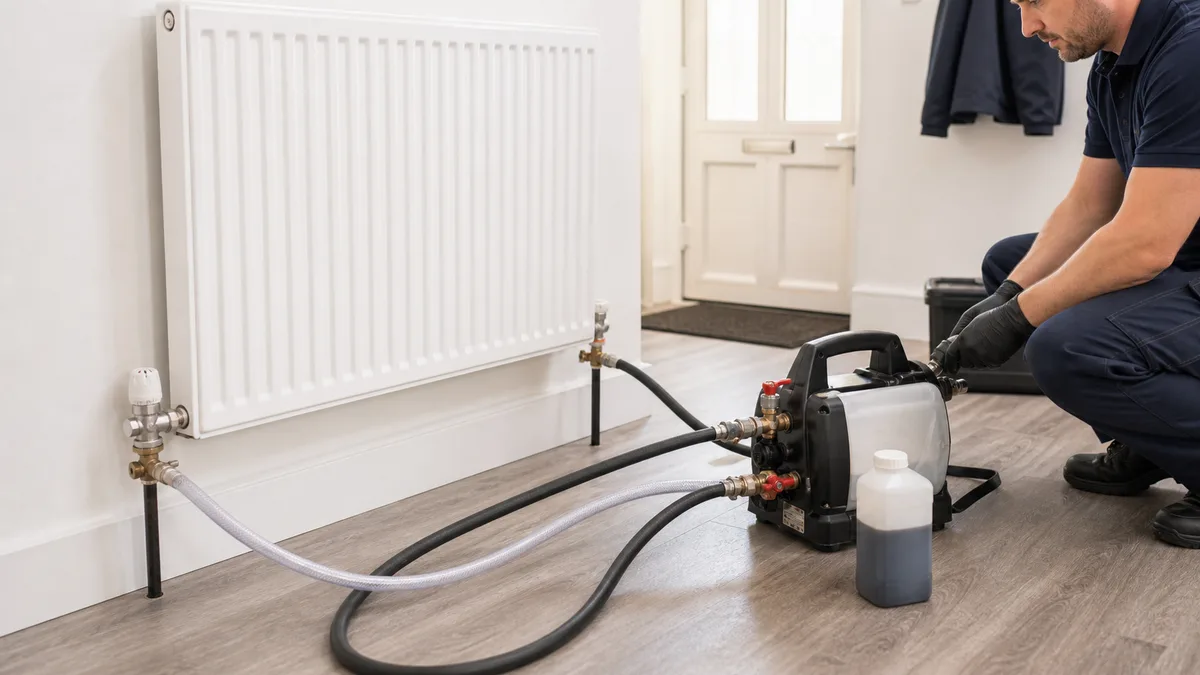
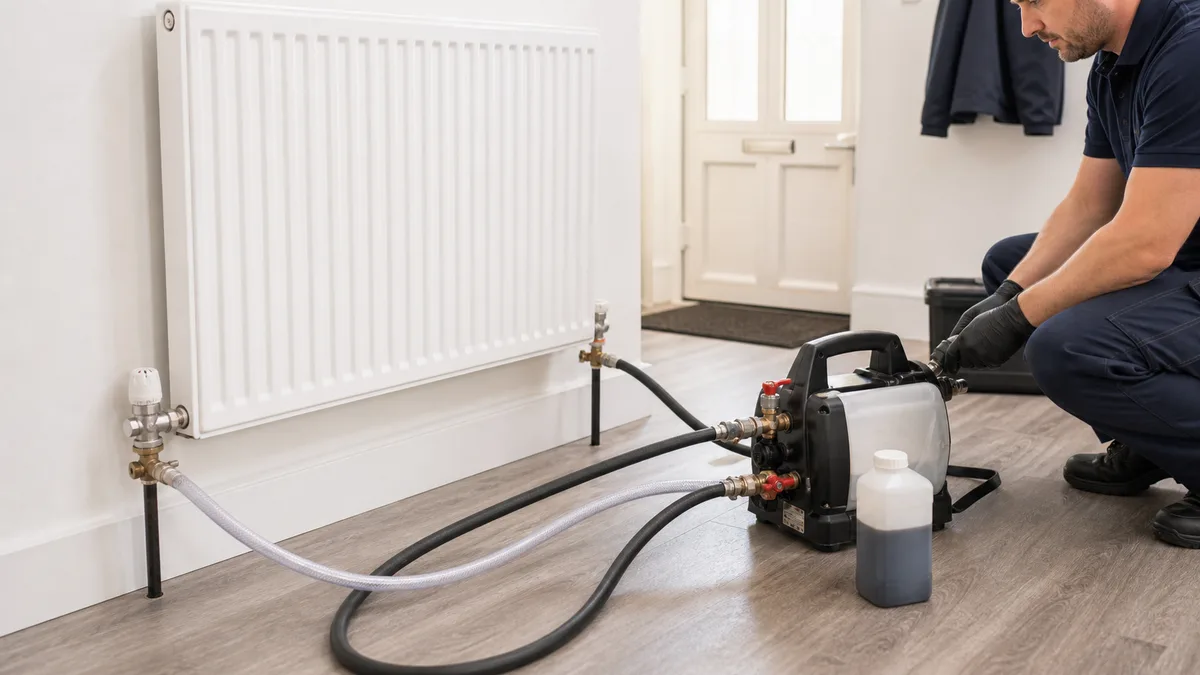
An annual boiler service is essential — but it only services the boiler itself: the heat exchanger, burner, seals, flue, and controls. It does not address the water quality circulating through the radiators and pipework. Over years of use, iron oxide sludge (magnetite), limescale, and corrosion debris accumulate throughout the system. A power flush removes all of it. A boiler service does not.
The distinction matters because a system full of sludge will continue to perform poorly even with a recently serviced boiler. Here are the seven signs that power flushing — not just an annual service — is what your system needs.
1. Radiators are cold at the bottom but hot at the top
However, this is the most reliable single indicator of sludge accumulation. Magnetite is denser than water and settles at the lowest point of each radiator. Cold patches at the bottom (with heat at the top) mean sludge is occupying space that should be filled with hot water. Bleeding the radiator produces no improvement because the issue is not air — it is solid deposits.
2. Some radiators are significantly cooler than others
Additionally, if one or two radiators on the system are noticeably cooler than the rest (particularly those furthest from the boiler), the supply pipes to those radiators are partially blocked with sludge. The system is routing the hot water path of least resistance, bypassing the most blocked circuits. Re-balancing the system temporarily improves distribution but does not remove the sludge causing the restriction.
3. The boiler makes banging or kettling noises
Specifically, “kettling” is the sound of a boiler struggling to heat water past limescale and magnetite deposits on the heat exchanger. The water flashes to steam locally, creating the distinctive banging or gurgling noise. A kettling boiler is working significantly harder than it should — with consequent fuel waste and accelerated wear. Power flushing removes the deposits causing the problem; descaling tablets address only part of it.
4. Pump failure or repeated pump replacement
For example, central heating pumps operate in the circulating water. In a system with high sludge content, the pump impeller wears faster, the pump seals fail, and the pump may lock up entirely with magnetic sludge on the rotor. If your heating engineer has replaced the pump more than once in the last five years, the underlying cause is sludge — replacing the pump again without power flushing will produce the same result.
5. The water drained from a radiator is black or dark grey
As a result, you can do a quick self-check: close the isolation valves on one radiator, remove the bleed screw, and let a small amount of water drain into a white container. Clear water with slight discolouration is normal. Water that is dark grey or black indicates high magnetite concentration throughout the system. Any engineer seeing this level of contamination will recommend power flushing before fitting any new components.
6. The boiler is being replaced or is new
Furthermore, fitting a new boiler to an old system with sludge is one of the most common causes of premature boiler failure. Boiler warranties typically include a condition that the system water must meet a quality standard at installation. Most manufacturers and installers require a system flush before commissioning a new boiler. Fitting a magnetic filter without first flushing the system protects the new boiler from future sludge but does not remove the existing deposits from the pipework and radiators.
7. Heating takes a long time to warm up from cold
In particular, a system with good water quality will bring all radiators to operating temperature within 20–30 minutes from a cold start. A sludge-contaminated system takes significantly longer — the restricted circulation means the boiler cycles more frequently, and the radiators heat unevenly. Energy consumption is measurably higher as a result. A power flush restores circulation to as close to original specification as the pipework allows.
What a power flush costs
Consequently, the cost of a power flush depends on the number of radiators and the sludge level. For a 6-radiator system, expect £400–£550. For 10 radiators, £550–£750. This compares to the ongoing cost of higher gas bills, pump replacements, and ultimately a premature boiler failure — which can run to £2,000–£3,500 for a new boiler installation.
Similarly, a magnetic filter installed after power flushing prevents rapid re-accumulation of sludge. Most plumbing engineers recommend combining the two services.
For a power flush quotation, call 0333 772 0123 or book online.