Leak Detection in Reading
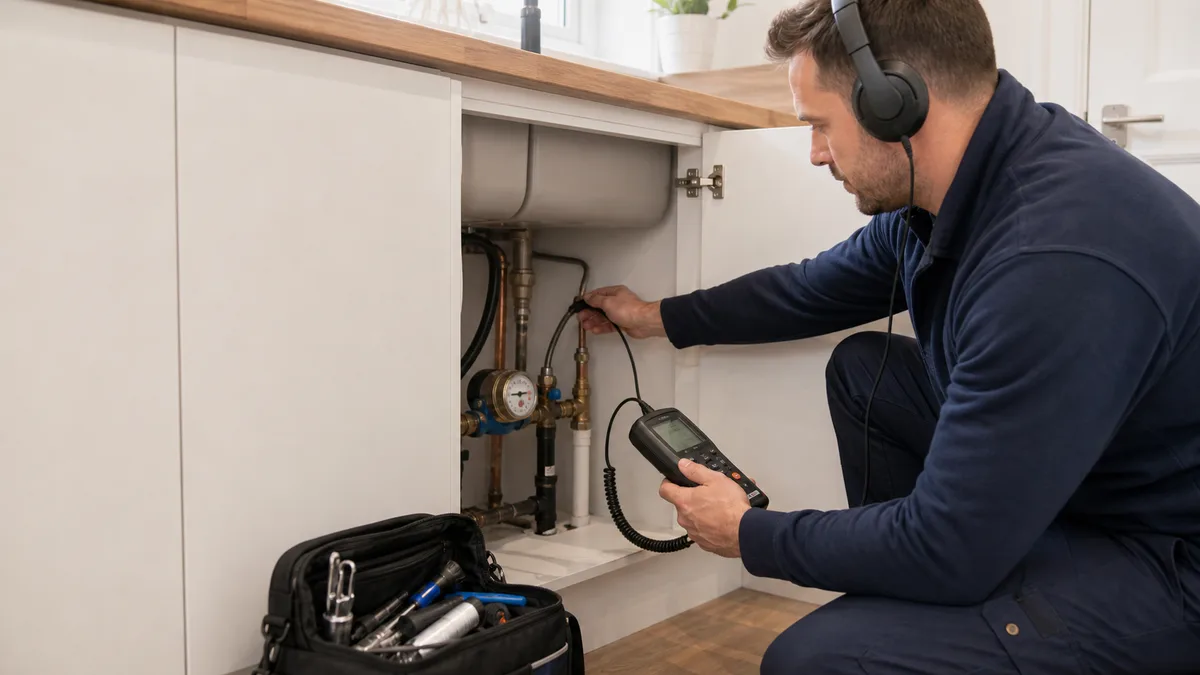
Reading's hard water supply causes pin-hole corrosion in copper pipework, creating invisible leaks that waste thousands of gallons annually. Victorian properties in RG1 and RG2 often hide corroded cast-iron sections beneath walls and foundations, silently draining water and driving bills upward. A single pin-hole leak in Reading copper pipes can leak 2,000+ litres weekly undetected. Professional leak detection across Reading identifies the source without invasive excavation, protecting both your water bill and the local water table that Wokingham Council monitors.
Leak detection in Reading finds pin-hole corrosion in copper pipes caused by hard water. Victorian properties in RG1 and RG2 suffer hidden water loss beneath walls and foundations. Acoustic detection pinpoints leaks without excavation. Early detection prevents costly structural damage and reduces Reading's water consumption.
Drainage in Reading — what local engineers know
Reading's hard water supply (supplied by Thames Water) accelerates pin-hole corrosion in copper pipes—a widespread issue across RG1, RG2, RG3, and RG4 postcodes. Victorian properties in Reading frequently have cast-iron main feeds that corrode from the inside outward, creating slow leaks beneath foundations. Wokingham Council records show water loss complaints concentrated in RG1–RG2 dense areas. Thames Water encourages leak detection to reduce wastewater and environmental strain. Modern properties in Reading (RG3, RG4) suffer less corrosion but still experience joint failures. Acoustic leak detection technology pinpoints water loss without digging, preventing expensive foundation exposure in Reading's historic properties.
- Hard water supply causes limescale accumulation in boilers, radiators and soil pipe joints — powerflush and descaling demand is high across Reading
- Separate sewer system across most of Reading: misconnections (e.g. washing machines plumbed into surface water drains) are a known local issue and can result in environmental enforcement action
- Ageing infrastructure in parts of Reading means drain blockages from grease, wipes and root ingress remain the most common call-out reasons
- With 28% of properties built before 1920, salt-glazed clay drainage and lead-solder copper pipework are common — pipe collapse, root ingress and joint failure are recurring call-out drivers.
What happens when you call us in Reading
- 1 Immediate dispatch. We find the nearest available engineer covering RG1/RG2 and confirm the ETA before the call ends.
- 2 On-site diagnosis — no guessing. The engineer inspects using professional-grade equipment including CCTV where needed and quotes a fixed price before work starts.
- 3 Job complete, report issued. You receive a written completion report. All work is guaranteed — same fault returns within the guarantee period, we come back free.